

Your Guide to Natural Anal Lube

Worried about what's in your lubricant? You're not alone. When it comes to anal sex, lube is absolutely essential for comfort and safety. But with so many options, you might be wondering: what makes an anal lube "natural," and does it really matter?
The short answer is yes, it matters a lot. A natural formula skips the harsh synthetic chemicals—like parabens, glycerin, and petroleum byproducts—found in many mainstream lubes. Instead, it uses plant-derived, body-safe ingredients designed to work with your body, not against it.
What Makes an Anal Lube Natural and Why It Matters
Think of it like choosing organic food over something highly processed. When a lubricant is labeled "natural," it means the formula is built to minimize irritation and respect your body's delicate chemistry, especially in your most sensitive areas.
Here's the key thing to remember: unlike the vagina, the anus doesn't self-lubricate. At all. This is why a high-quality lube is completely non-negotiable for any kind of anal play. Without it, friction can cause pain and, more seriously, lead to tiny tears in the delicate rectal tissue, increasing the risk of infections.
The Core Difference From Synthetic Options
The biggest divide between natural and synthetic lubes is right on the ingredients label. A conventional lubricant might have a long list of chemicals you can't pronounce, like propylene glycol, petrochemicals, and artificial fragrances. While they reduce friction, these ingredients can sometimes trigger irritation, allergic reactions, or disrupt your body's natural pH balance.
A natural anal lube, however, has a much cleaner, more recognizable profile. These formulas lean on the hydrating and soothing power of plants to get the job done.
You'll find that a quality natural lube typically has:
- Plant-Derived Ingredients: The formula is built around things like aloe vera, flaxseed, or even mushroom extracts.
- No Harsh Chemicals: They are intentionally made without parabens, glycerin, silicones, and artificial scents.
- A Body-Safe Formulation: The whole point is to respect your body's delicate tissues and natural chemistry.
This isn't just a niche trend. The move toward clean ingredients is a major shift in how we think about personal care. People are more aware than ever of what they put on and in their bodies, and sexual wellness products are no exception.
This consumer-led shift is pushing the entire industry forward. The global personal lubricant market is booming, and a huge part of that growth comes from the demand for natural and organic options. As people learn more about sexual health, they're actively looking for safer, skin-friendly alternatives.
Prioritizing Your Sexual Health
Choosing a natural lube is a simple but powerful way to take charge of your sexual health. When you opt for a product with clean, transparent ingredients, you slash the risk of having a bad reaction. You can feel confident that what you’re using is designed for maximum comfort and safety. This mindful approach doesn't stop with lube, either; you can explore environmentally-friendly sex products for a greener pleasure in our other guide.
Ultimately, making the switch gives you peace of mind. You can relax and focus on the moment, knowing you’re nourishing your body with gentle ingredients instead of worrying about irritation or what those chemicals might be doing long-term. It's an investment in a healthier, more connected, and far more enjoyable intimate life.
What’s Really in Your Lube? A Guide to Reading the Label
Choosing a natural anal lube shouldn't feel like you need a chemistry degree. But staring at a long list of unpronounceable ingredients can be intimidating. The good news is, you don't have to be a scientist to make a smart choice—we’ll break it all down so you can read any lube label with confidence.
Think of it just like reading a food label. Over time, you’ve learned to spot the stuff you want to avoid, like high-fructose corn syrup or weird additives. Applying that same mindset to lube is a game-changer for your sexual wellness.
The Good Stuff: Ingredients That Work With Your Body
When you’re on the hunt for a quality, body-safe lube, a few key ingredients are green flags. These are the all-stars that hydrate, soothe, and provide that perfect glide without causing irritation down the line.
Here’s what you want to see on the list:
- Aloe Vera: This plant is a powerhouse of calming and healing properties, making it a fantastic base for lube. It’s naturally hydrating and incredibly gentle on sensitive tissue.
- Plant-Based Humectants: Look for things like flaxseed or mushroom extract. These ingredients are like little moisture magnets, pulling hydration into the skin for a slippery feel that actually lasts.
- Hyaluronic Acid: A true skincare superstar, this molecule can hold up to 1,000 times its weight in water. It delivers amazing hydration without any sticky, tacky feeling.
- Food-Grade Preservatives: Even natural products need a way to stay fresh and bacteria-free. Gentle, food-grade options like potassium sorbate or citric acid get the job done without harsh chemicals.
You'll often find these heroes in high-quality water-based sex lubes, which are perfect for just about everyone. They’re safe with all toys and condoms and, best of all, clean up with zero fuss.
The Red Flags: Ingredients to Leave on the Shelf
Knowing what to look for is only half the battle. It's just as important to know which ingredients to avoid. Many mainstream lubricants are packed with synthetic chemicals that can mess with your body's delicate balance, leading to irritation, dryness, or even a higher risk of infections. The rectal tissue is highly absorbent, so what you put on it really matters.
Keep an eye out for these common offenders:
- Glycerin and Glucose: These are essentially sugars. They can throw your natural pH balance out of whack, creating the perfect environment for yeast to thrive.
- Parabens: You’ve probably seen "paraben-free" on other cosmetics for a reason. These synthetic preservatives (like methylparaben) have been linked to hormone disruption.
- Propylene Glycol: This is a petroleum by-product that can be seriously irritating. It has a high osmolality, which means it can actually pull moisture out of your cells, leading to dryness and potential tissue damage.
- Artificial Fragrances and Flavors: "Fragrance" is a sneaky catch-all term that can hide dozens of undisclosed chemicals. These are a primary cause of allergic reactions and serve no real purpose in a good lube.
- Petroleum and Mineral Oil: These will degrade latex condoms, making them unsafe for preventing STIs and pregnancy. They also create a film that can trap bacteria against the skin.
The Bottom Line: A genuinely natural lube will have a short, understandable ingredient list. If you can’t pronounce most of it or you spot any of the red flags above, it’s a good sign to put it back and find something better.
Natural Anal Lube Ingredient Cheat Sheet
To make this even easier, here's a quick cheat sheet. Think of it as your pocket guide to decoding lube labels at a glance.
| Ingredient Category | Look for These (Beneficial) | Why It's Good | Avoid These (Potentially Harmful) | Why You Should Avoid It |
|---|---|---|---|---|
| Base | Aloe Vera, Purified Water | Naturally hydrating and soothing to delicate tissues. | Propylene Glycol | Can irritate skin and damage rectal cells due to high osmolality. |
| Preservatives | Potassium Sorbate, Citric Acid | Gentle, food-grade options that prevent bacterial growth safely. | Parabens | Synthetic chemicals that may disrupt hormonal balance. |
| Thickeners | Plant Cellulose, Flaxseed Extract | Creates a smooth, long-lasting glide using natural sources. | Petroleum, Mineral Oil | Degrades latex condoms and can trap harmful bacteria. |
| Moisturizers | Hyaluronic Acid, Mushroom Extract | Deeply hydrates tissues without feeling sticky or tacky. | Glycerin, Glucose | Sugary ingredients that can disrupt natural pH and lead to infections. |
| Additives | Natural Plant Extracts (e.g., Chamomile) | Provide extra soothing benefits for sensitive skin. | Artificial Fragrances, Colors, Flavors | Common allergens and unnecessary chemicals that can cause irritation. |
Becoming a savvy label reader puts you in the driver's seat of your own sexual health. It empowers you to choose a natural anal lube that not only feels amazing but also respects and protects your body.
The Real Benefits of Choosing Natural Anal Lube
Making the switch to a natural anal lube is about so much more than a cleaner ingredient list. It’s about making a choice that has a real, noticeable impact on your entire intimate experience. The benefits ripple out from simply reducing friction to affecting your physical health and even your mental comfort during sex.
These advantages fall into three main categories: better health and safety, seriously enhanced comfort and pleasure, and the priceless peace of mind you get from using a product that's truly body-safe. Each one helps build a healthier, more connected, and way more enjoyable sex life.
Prioritizing Health and Safety
Let’s be real—the tissues we’re dealing with here are some of the most sensitive on your body. The rectal lining is incredibly delicate and absorbent, which means whatever you put there can get into your system fast. This is exactly why going with a natural anal lube is such a game-changer.
When you avoid harsh synthetic chemicals like parabens, glycerin, and propylene glycol, you dramatically lower your risk of irritation, allergic reactions, and inflammation. These common additives are notorious for messing with your body's natural pH balance and can even damage the delicate cells back there, leaving you more vulnerable to infections.
- Reduces Irritation: Natural formulas skip the common culprits like artificial fragrances and colors, making them perfect for anyone with sensitive skin.
- Maintains pH Balance: Ingredients like glycerin (a sugar) can become a food source for yeast and throw your natural flora out of whack. Natural lubes sidestep this problem to help maintain a healthy internal environment.
- Lowers Risk of Micro-Tears: Some lubes have a high osmolality, meaning they literally pull moisture out of your cells. This leads to dryness and a higher chance of tiny, painful tears. Good natural lubricants are formulated to be isotonic, matching your body’s natural hydration to keep tissues safe and sound.
Enhancing Comfort and Pleasure
Safety aside, the actual feel of a lubricant can make or break the moment. Many conventional lubes feel sticky, tacky, or goopy, which is a total distraction. By contrast, natural anal lubricants are often engineered to mimic your body's own moisture, creating a seamless and incredibly comfortable glide.
That focus on a better texture directly leads to better sex. When a lube feels smooth and silky, it actually heightens sensation instead of covering it up. You're far more likely to relax and stay in the moment when you're not fighting a sticky mess or having to reapply it every few minutes.
Even the U.S. sexual lubricant market is catching on, with big brands now highlighting their natural and organic ingredients. These formulas are becoming popular because they provide fantastic moisture without causing irritation, all while supporting that critical pH balance. You can dive deeper into this market shift over at GlobeNewswire.
Gaining True Peace of Mind
Finally, there’s a huge emotional and psychological win that comes with choosing a natural lube. Just knowing you’re using a product with clean, transparent, and body-safe ingredients lets you fully relax and connect with your partner. You’re not left wondering what you're putting on—or in—your body.
This confidence is a core part of a healthy sexual mindset. When you trust the products you use, you get to peel back a layer of anxiety, freeing you up to focus on connection and pleasure.
This kind of peace of mind is incredibly empowering. It’s a genuine act of self-care and a deliberate choice to put your well-being first. By choosing a natural formula, you aren't just buying a better product; you're investing in a smarter, healthier, and more mindful approach to your sex life.
How to Choose the Right Natural Lube for Your Needs
Walking down the lube aisle (or scrolling online) can feel overwhelming. With so many options, how do you pick the right one? It’s actually simpler than it looks. The secret is to let your personal needs guide you—things like whether you're using condoms, what your toys are made of, and how sensitive your skin is.
Natural lubes generally fall into three camps: water-based, oil-based, and hybrid formulas. Each one has its own personality and excels in different situations, so let's break them down.
Comparing Natural Lube Types
Choosing the right lube often comes down to understanding the pros and cons of each type. This quick-glance table can help you figure out which one is the best fit for what you have planned.
| Lube Type | Best For | Condom & Toy Safe? | Longevity | Cleanup |
|---|---|---|---|---|
| Water-Based | All-around use, toy play, use with condoms | Yes, safe with latex, polyisoprene, and all toy materials. | Shorter; may require reapplication. | Super easy; washes off with water. |
| Oil-Based | Long-lasting sessions, massage, solo play without silicone toys. | No, degrades latex condoms and silicone toys. Safe with non-latex condoms (polyurethane). | Excellent; lasts a very long time. | More effort; requires soap and water. |
| Hybrid | The "best of both worlds" feel of silicone with easy cleanup. | Yes, safe with latex condoms. Check manufacturer's notes for silicone toy safety. | Great; longer-lasting than water-based. | Fairly easy; washes off with soap and water. |
Think of this table as your cheat sheet. When in doubt, a quick look here will remind you of the key differences and help you grab the perfect bottle for the occasion.
Water-Based: The Universal Go-To
Let’s get right to it: water-based lubricants are the dependable, do-it-all option. They are 100% safe to use with all condoms—latex or otherwise—and every kind of sex toy, even your favorite silicone ones. Plus, cleanup is a breeze, washing away easily with water without staining sheets.
So, what's the catch? Because your body absorbs the water, these lubes can dry out a bit quicker than others. It's not a big deal; it just means you might need to reapply during a longer session to keep things feeling fantastic.
Oil-Based: The Endurance Champion
If you're looking for a lube with serious staying power, oil-based formulas are your best friend. Made from things like coconut or almond oil, they provide an incredibly silky, long-lasting glide that’s perfect for extended play or anyone who needs extra moisture.
But there's a big, unmissable rule here: oil breaks down latex. Never use an oil-based lube with latex condoms, as it can cause them to weaken and fail. They're also a no-go for most silicone toys, which can become damaged over time by the oil.
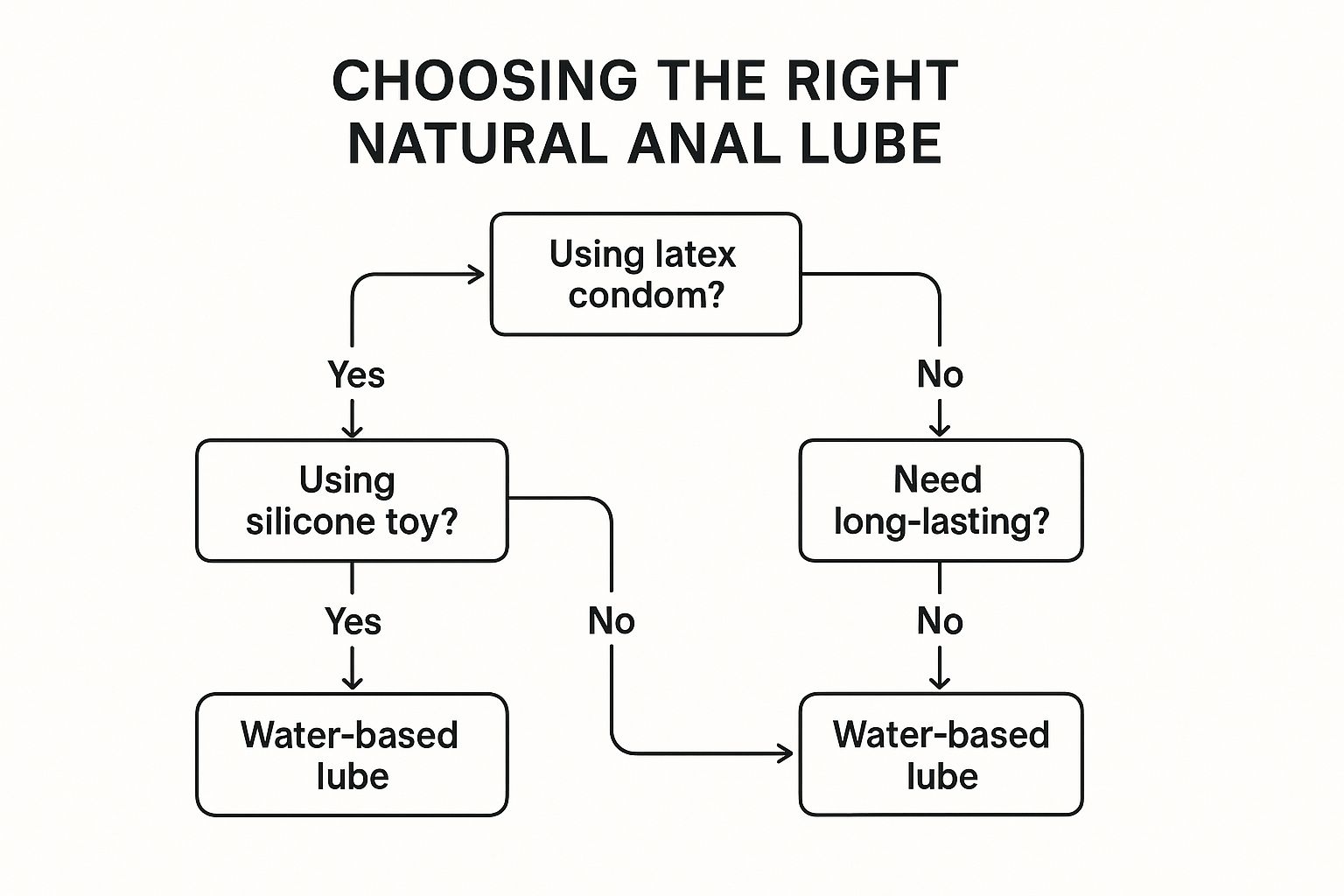
As you can see, if condoms or silicone toys are part of the fun, water-based lube is always the safest bet.
A Quick Checklist for Picking Your Perfect Lube
Feeling confident? Let's dial it in. Just ask yourself these three simple questions to find the natural anal lube that’s right for you.
1. Are You Using Condoms or Toys?
This is the big one that narrows it down immediately. If the answer is "yes" to latex condoms or "yes" to silicone toys, your choice is made: go with a water-based lube. It's the only type that plays nicely with both, keeping you safe and your toys in great shape.
2. How Sensitive Is Your Skin?
If your skin is easily irritated, a simple, high-quality water-based formula is your best starting point. Look for products with short ingredient lists and soothing extras like aloe vera. Steer clear of anything with added fragrances or flavors, even if they're labeled "natural."
Pro Tip: Always do a patch test before going all in with a new lube. Dab a small amount on your inner arm and wait 24 hours. If you don't see any redness or irritation, you're good to go. It's a tiny step that can prevent a lot of discomfort.
3. How Long Do You Need It to Last?
If longevity is your top priority and you're not using latex condoms or silicone toys, an oil-based natural lube is an amazing choice. It’s ideal for solo play with glass or metal toys, or for partner fun where condoms aren't in the picture. Just be ready for a slightly more involved cleanup.
For a more detailed look at specific formulas, check out our guide on the best lube for anal. By thinking through these key points, you can easily find a product that makes every experience safer, more comfortable, and way more pleasurable.
Getting the Most Out of Your Anal Lube
So, you've found the perfect anal lube natural formula. That’s a huge step! But the real magic happens when you know how to use it right. It’s less about following a strict set of rules and more about learning what feels good, so you can ditch the anxiety and just enjoy the moment.
The million-dollar question: how much lube is enough? The honest answer is almost always more than you think. For anal play, you can’t really overdo it. The whole point is to create a slick, gliding sensation, not just a hint of slipperiness.
Think of a quarter-sized amount as your starting point, but don't be shy about reaching for the bottle again. Using too little is where things get uncomfortable fast. Friction is the enemy of pleasure, so being generous from the start is the best way to keep things moving smoothly.
How to Apply It Like a Pro
Where the lube goes is just as important as how much you use. You want to make sure every surface is prepped for a friction-free experience.
Here’s a simple game plan that works every time:
- Prep the Receiver: Start by applying a good amount of lube to the outside of the anus and a little bit just inside. This not only lubricates but also helps the muscles relax.
- Coat the Giver: The penis or toy needs just as much attention. Apply lube all over the shaft to ensure it's slick and ready. Lube on both sides creates the ultimate smooth ride.
- Reapply Without Hesitation: Pay attention to your body. The second you feel any hint of drag or discomfort, it's time to pause and add more. Keep the lube bottle handy so you don't have to interrupt the mood.
Playing it Safe (and Smart)
A few quick checks before you get started can give you the confidence to let go and have fun. Think of these as your pre-flight safety check for pleasure.
First things first, always do a patch test with any new product. Dab a small amount on your inner wrist or thigh and give it 24 hours. If there's no redness or irritation, you're in the clear. It's a tiny step that can save you from a potential allergic reaction.
Your most powerful tool for amazing sex is communication. Check in with your partner. A simple "Is this feeling good?" or "Should we add more lube?" can transform an experience and builds a deep sense of trust and connection.
And don't forget to check for compatibility. We've talked about how oil-based lubes are a no-go with latex condoms because they can cause them to break. A quick look at the lube's label to confirm it works with your condoms and toys is a non-negotiable part of staying safe.
Ultimately, using a natural anal lube is all about being prepared, paying attention, and talking openly. When you have these basics down, you're free to focus on what really matters: pleasure and connection.
Shop Anal Lubricants
Hand-picked best-sellers — body-safe, discreetly shipped.


Got Questions About Natural Anal Lube? We’ve Got Answers.
We've covered a lot of ground, from decoding ingredient labels to picking the right formula for you. To tie it all together, let's go through some of the most common questions people have. Think of this as your final cheat sheet to clear up any lingering doubts so you can feel completely confident.
Can I Just Use Coconut Oil as a Natural Lube?
This is a big one, and the short answer is a hard maybe—with some serious warnings attached. On the one hand, yes, coconut oil is natural and provides a really silky, long-lasting glide. For solo play or partnered fun where latex condoms aren't in the picture, it can feel amazing.
However, the moment latex condoms are involved, coconut oil becomes a dealbreaker. Oil of any kind degrades latex, making it weak and likely to break. One study found that latex condoms exposed to mineral oil had a 90% failure rate under stress. While that’s not coconut oil specifically, the principle is the same: oil and latex are a dangerous combination.
- The good: It’s long-lasting, moisturizing, and feels great.
- The bad: It’s NOT safe with latex condoms and can also damage some silicone toys.
- The ugly: It gets messy and is a pain to clean up compared to water-based formulas.
So, while it’s a tempting DIY natural anal lube, its limitations make it a risky bet for safer sex.
Aren't All Water-Based Lubes Considered Natural?
Not even close. The term "water-based" sounds clean and simple, but many conventional lubricants in this category are loaded with synthetic chemicals. It’s incredibly common to find things like propylene glycol, parabens, glycerin, and artificial fragrances on their ingredient lists.
A truly natural anal lube that’s water-based is formulated without all that stuff. It still uses purified water as its foundation but gets its slickness and soothing qualities from plant-derived ingredients like aloe vera or flaxseed extract. The only way to know for sure is to read the ingredient list.
"Water-based" just tells you what the main ingredient is. It says nothing about the purity of the formula. Always check the full list to make sure you're getting a genuinely natural product free from harsh synthetics.
What’s the Difference Between "Natural" and "Organic" Lube?
People often use these terms interchangeably, but they mean very different things. Nailing this distinction helps you know exactly what you’re buying.
-
Natural: This generally means the ingredients come from plant or mineral sources instead of being created in a lab. The catch? The term "natural" isn't strictly regulated, so its meaning can vary. A good natural lube will have a transparent, plant-heavy ingredient list.
-
Organic: This is a much more serious, regulated term. For a product to be labeled "organic," its ingredients must be grown and processed without synthetic pesticides, fertilizers, or GMOs. An official organic certification (like from the USDA) is proof that the product meets strict government standards.
Here’s an easy way to remember it: all organic lubes are natural, but not all natural lubes are organic. Choosing organic gives you an extra layer of confidence about the purity and sourcing of the ingredients.
How Should I Store My Natural Anal Lube?
Proper storage is key to keeping your natural anal lube fresh and effective. Because these formulas often rely on gentler, food-grade preservatives, they can be more sensitive to their environment than their synthetic cousins.
Just follow a few simple rules:
- Keep it cool and dark. Store your lube in a nightstand drawer or cabinet. Direct sunlight and heat can break down the natural ingredients and weaken the preservatives.
- Keep the cap on tight. Always seal the bottle securely after you’re done. This keeps air and bacteria from getting in and contaminating the product.
- Check the expiration date. Natural lubricants have a shelf life. Look for the "best by" or expiration date on the bottle and toss it if it’s past its prime. Using expired lube could lead to irritation or an infection.
Following these simple steps ensures that every time you reach for your lube, it’s as safe and effective as the day you bought it.
At My Luxury Toys, we believe everyone deserves access to high-quality, body-safe pleasure products that don’t break the bank. Our curated collection of natural lubricants is designed to enhance your comfort and peace of mind.
Ready to find your perfect match? Explore our complete range of lubricants now.