

How to Overcome Intimacy Issues and Rebuild Connection

Feeling more like roommates than partners? You're not alone. Many couples find themselves drifting apart, often so slowly they don't notice until the emotional and physical gap feels huge. The good news is that with intention and the right approach, you can find your way back to each other.
This guide will offer actionable, helpful solutions for rebuilding that connection, starting with the most common concerns people have when facing intimacy challenges.
How to Overcome Intimacy Issues: Why It Fades and Where to Begin
Intimacy doesn't just disappear overnight. The reasons it fades are complex, and it’s rarely one person’s fault. Daily stress, work demands, financial worries, and pure exhaustion can slowly erode the energy needed for genuine connection. Unresolved fights and unspoken resentments also build invisible walls, making vulnerability feel too risky.
To overcome intimacy issues, the first step is understanding why the distance grew. Often, a decline in physical and emotional connection creates a painful cycle. When touch decreases, emotional distance follows, leaving both partners feeling lonely. This can lead to a total communication breakdown.
Recognizing these patterns isn’t about blame; it's about identifying a shared challenge. This mindset shift is crucial. It moves you from opponents in a silent struggle to teammates working toward the same goal: reconnecting.
"Acknowledge the distance without judgment. The goal isn't to fix everything at once but to simply open a door that has been closed. A small, gentle conversation is more powerful than a grand, forced gesture."
Before you can tackle the problem, it helps to pinpoint the specific cause. Here’s a look at common reasons intimacy fades and a manageable first step for each.
Common Causes of Fading Intimacy and Your First Steps
| Common Cause | Emotional Impact | First Actionable Step |
|---|---|---|
| Chronic Stress & Burnout | Feeling emotionally numb, irritable, or too exhausted for connection. | Schedule 15 minutes of "do nothing" time together, with no phones or distractions. Just sit together. |
| Unresolved Conflict | Lingering resentment or anger creates an invisible barrier. | Agree to a "ceasefire" on a specific recurring argument. Write down your feelings separately without sharing them yet. |
| Body Image Issues | Feeling insecure or self-conscious, which makes vulnerability feel unsafe. | Offer your partner a genuine, non-physical compliment. "I love the way you laugh," or "You're so smart." |
| Mismatched Libidos | One partner desires sex more than the other, leading to pressure and rejection. | Have a conversation about other forms of physical touch you both enjoy, like cuddling or massage, with no expectation of sex. |
| Life Transitions (Kids, New Job) | Time and energy are diverted, putting the relationship on the back burner. | Reclaim a small ritual you used to have, like a morning coffee together or a goodnight kiss that lasts more than a second. |
Thinking about the root cause helps you target your efforts instead of just feeling overwhelmed. It provides a clear starting point.
Your First Step Toward Reconnection
Rebuilding intimacy can feel like a huge task, but it always begins with small, intentional actions. Before diving into a "big talk," you need to create a foundation of safety and respect.
Here's a simple, non-threatening exercise to try tonight: set aside 10 minutes of screen-free time. During that time, share one small thing you appreciated about each other that day. It can be as minor as, "I really appreciated you making the coffee this morning."
This isn't about solving big problems. It's about re-establishing positive contact and remembering you're on the same team. For some, reintroducing playfulness can also ease tension. If you're open to it, you can learn more by exploring how sex toys can improve intimacy in your relationship.
How to Create a Safe Space for Honest Communication
Real connection starts with talking. But "just talk more" is useless advice when conversations about intimacy feel like a minefield. To genuinely overcome a fear of intimacy, you need to build healthier communication habits that foster trust and empathy.

When closeness has faded, the fear of saying the wrong thing can lead to painful silence, which only widens the gap. The key is to create a safe space where you can both be vulnerable without fearing attack.
Setting the Stage for Open Dialogue
Before diving into heavy topics, set a positive, non-confrontational tone. Avoid the dreaded "we need to talk" moment. Instead, find small pockets of time to practice a new way of interacting.
A great first move is agreeing on a time to chat without distractions. Put phones away, turn off the TV, and give each other your full attention, even if it's just for 15 minutes. This small act sends a powerful message: this conversation, and your partner, is a priority.
Shift From Accusation to Expression
One of the most powerful changes you can make is reframing how you talk about your feelings. Using accusatory language forces your partner into defensive mode and shuts down progress.
This is where "I feel" statements are invaluable. Instead of pointing a finger with, "You never want to touch me anymore," frame it from your own experience.
For example: "Lately, I've been feeling lonely, and I really miss feeling physically close to you." This isn't an attack. It's an honest expression of your emotional state, inviting your partner to understand your experience instead of defending their actions.
This simple switch turns a battle into a collaborative mission. It’s no longer you vs. them; it’s both of you against the distance.
The Real Power of Listening
Communication is a two-way street. Expressing yourself is half the equation; showing your partner you're really hearing them is the other. Active listening isn't just waiting for your turn to talk; it's making your partner feel seen and validated.
Here are a few ways to practice active listening:
- Paraphrase and Reflect: After your partner shares, say it back in your own words. "Okay, so what I'm hearing is that work has been so overwhelming that you feel completely drained by the end of the day." This shows you're paying attention.
- Ask Open-Ended Questions: Avoid "yes" or "no" questions. Instead, encourage them to elaborate. Try, "Can you tell me more about what that feels like for you?"
- Validate Their Feelings: Validation isn't the same as agreement. Acknowledge their emotions with simple phrases like, "That makes sense," or "I can see why you would feel that way."
When your partner feels heard, they're more likely to open up. A new, shared experience can also spark easier conversations. Our step-by-step guide on introducing sex toys offers communication-focused tips for enhancing couple intimacy.
Rebuilding Your Emotional Connection Outside the Bedroom

Lasting intimacy isn’t built on grand gestures. It's woven from thousands of small, everyday moments. If you want to learn how to overcome intimacy issues, the real work begins by strengthening your emotional foundation long before you think about the bedroom.
The goal is to feel seen, heard, and valued during mundane tasks like making dinner or relaxing on the sofa. When that emotional bond is solid, physical intimacy flows naturally. It stops being a separate, high-pressure event.
Recognizing and Responding to Emotional Bids
A powerful concept in relationship psychology is the emotional bid. A "bid" is any small attempt one partner makes to connect—a question, a comment, a shared glance, or a light touch.
Think of these as tiny invitations. Your partner might look out the window and say, "Wow, check out that sunset." That’s a bid. You can ignore it ("turn away"), give a dismissive reply ("turn against"), or engage with it ("turn toward") by saying, "That's gorgeous. I'm glad we get to see it together."
Turning toward these bids consistently is the secret to a strong emotional bond. It sends a clear message: "I see you. I hear you. You matter to me." When bids are ignored, it can build a wall of loneliness.
Weaving Connection into Your Daily Life
You don't need expensive dates to rebuild your emotional connection. You need small, consistent efforts that become a natural part of your routine. These rituals create a steady flow of positive interactions.
Here are a few simple rituals to try today:
- The 60-Second Hug: Hug for a full minute at least once a day. This is long enough to release bonding hormones like oxytocin, creating a tangible moment of connection.
- Share One Appreciation: Before bed, share one specific thing you appreciated about the other person that day. It can be as simple as, "I appreciated you making my coffee this morning."
- Dedicated Screen-Free Time: Carve out 20 minutes every evening where all devices are put away. Use this time to talk about your day or simply enjoy the quiet together.
Think of these small acts as deposits into your relationship's emotional bank account. They build a reserve of goodwill that helps you navigate challenges. As you focus on daily connection, you might find it useful to explore resources on promoting healthy sexuality and enhancing intimacy.
Navigating Physical Touch and Rebuilding Desire
When you've been emotionally distant, physical touch can feel loaded with stress. A huge part of figuring out how to overcome intimacy issues is gently re-learning how to connect through touch without the pressure of sex.
The point is to make touching feel safe, wanted, and genuinely good again for both of you. It's about starting over and building a new foundation of physical comfort.
Reintroducing Gentle, Pressure-Free Touch
First, take sex completely off the table for a set period. This move alone can be a massive relief. It lowers the stakes and reduces the performance anxiety that often suffocates desire. The focus shifts to simply being physically close again.
Think about simple, affectionate gestures with no expectations:
- Real Hugs: Not a quick pat on the back. Hold each other for a solid 20-30 seconds. This sustained contact helps release oxytocin, the "bonding hormone," nurturing connection.
- Everyday Touch: Look for small opportunities for contact. A hand on their back as you pass in the kitchen. Holding hands while watching a movie. Sitting close enough on the couch that your legs touch.
- A Simple Massage: Offer a five-minute neck or foot rub with no strings attached. The only goal is to help your partner relax and rebuild physical trust.
The goal is to re-wire your brains to see physical intimacy as a shared exploration of pleasure, not a chore. It's about taking small, intentional steps that make touch feel safe and desirable again.
Talking About Desire and Mismatched Libidos
It's a common truth: partners rarely have perfectly matched sex drives. When navigating intimacy issues, this gap can feel huge. Avoiding these conversations breeds resentment and rejection.
This is where "I feel" statements shine.
Instead of an accusation like, "You never seem to want me anymore," try a softer entry. Something like, "I've been feeling a little insecure lately because I really miss feeling close to you physically. I'd love to hear how you're feeling about it."
One is a fight starter; the other is an invitation for a real conversation.
It's also crucial to remember that a person's relationship with intimacy doesn't exist in a vacuum. Broader issues matter. For example, a staggering one in three women worldwide has experienced physical or sexual violence, which has a profound impact on their ability to feel safe. Acknowledging that underlying traumas might be part of the story builds empathy. You can discover more insights about sexual health statistics to better understand these factors.
Knowing When to Seek Professional Support
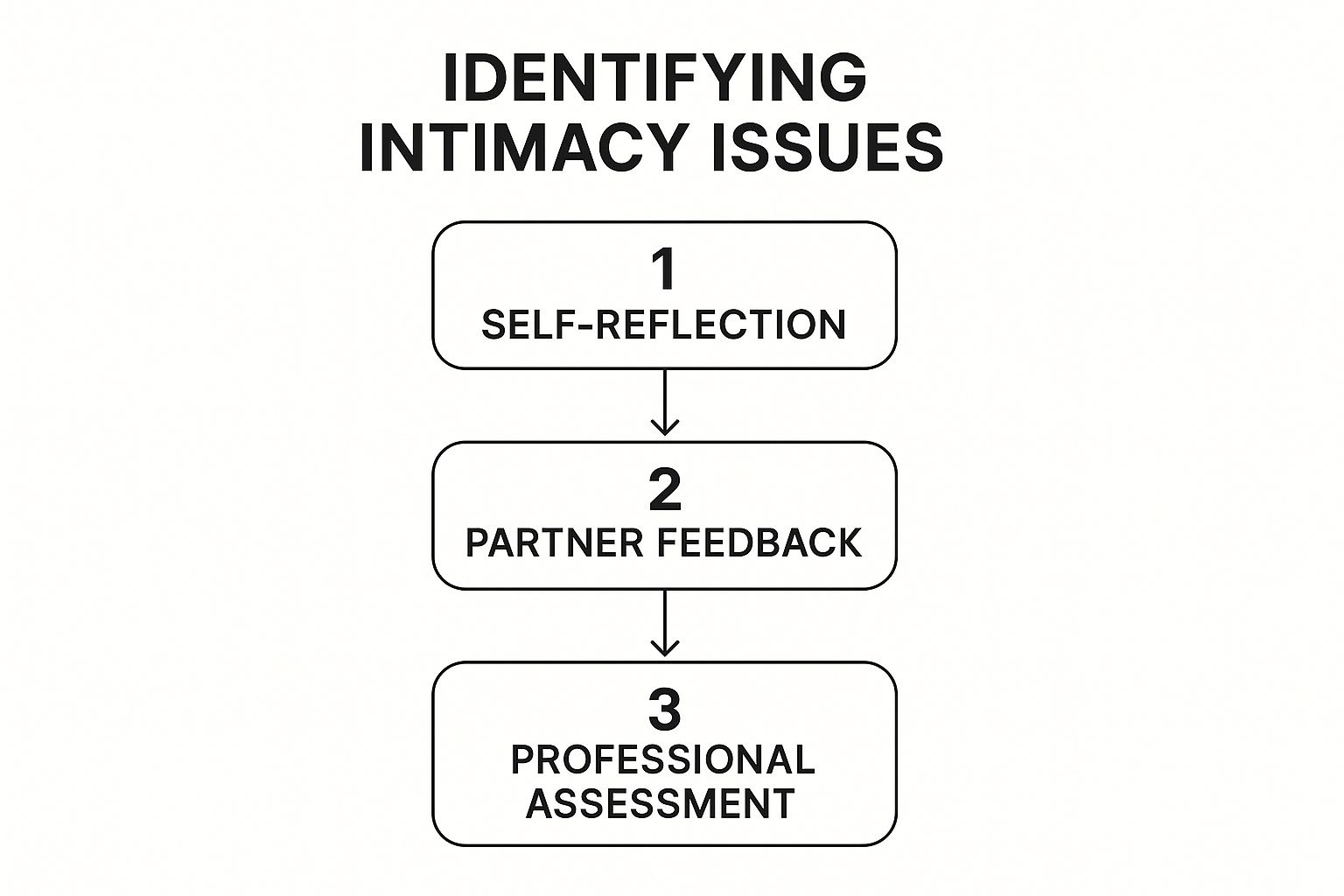
Trying to figure out how to overcome intimacy issues on your own can be tough. Sometimes the bravest and most effective step is bringing in a neutral third party to help you see the whole picture.

If you feel stuck, professional support can offer a fresh perspective and proven tools. Reaching out for help isn't a sign of failure. It's a profound act of commitment to your relationship and your own well-being.
Signs It Might Be Time for Help
Figuring out when to call a professional is a crucial step. It might be time if you recognize these patterns:
- Recurring Fights: Are you having the same argument on a loop? When fights never lead to resolution, they leave you drained.
- Deep Resentment: If one or both of you are clinging to past hurts, it’s nearly impossible to be vulnerable. Resentment is poison to intimacy.
- Total Communication Breakdown: You've stopped talking about anything meaningful because it feels too painful.
- Apathy or Hopelessness: The feeling that nothing will ever get better has crept in, and one or both of you are emotionally checking out.
When your attempts to reconnect lead to more frustration, a therapist can provide a safe space to break that cycle. They act as a guide, ensuring both of you feel heard.
What to Expect from Therapy
Couples therapy is a dedicated space to learn healthier ways of relating. A therapist specializing in relationships can help you get to the root of your intimacy issues, whether from attachment styles or unresolved trauma.
In sessions, you can expect to work on:
- Identifying Negative Cycles: You'll learn to spot the destructive patterns that keep you stuck.
- Learning New Communication Skills: This is about more than "I feel" statements. It's about practicing how to express needs and listen with empathy.
- Exploring Underlying Issues: A therapist helps uncover individual histories or fears impacting your connection.
Finding the right person is key. Look for a Licensed Marriage and Family Therapist (LMFT) or a certified sex therapist. Many offer a free initial consultation, a low-pressure way to see if their style is a good fit.
Answering Your Questions About Rebuilding Intimacy
Working your way back to each other brings up questions. As you figure out how to overcome intimacy issues, you’re probably wondering about timelines, roadblocks, and what to do when you feel stuck. Here are some real-world answers to common questions.
What’s the Real Reason We’re Having Intimacy Issues?
Every couple’s story is different, but the problem often starts with a breakdown in emotional communication. When you stop feeling emotionally safe, heard, or seen by your partner, physical closeness is usually the first thing to go.
Think of emotional safety as the bedrock of your relationship. If that foundation cracks from unresolved arguments, stress, or life changes, the entire structure of intimacy feels shaky. It's rarely a sudden lack of attraction; it's usually a frayed emotional connection.
How Long Does It Take to Get the Spark Back?
Honestly, there’s no magic number. A strict timeline only leads to frustration. How long it takes depends on what caused the distance, how long it's been going on, and how committed you both are to doing the work.
Instead of watching the calendar, focus on consistent, small steps. Celebrate the little victories, like getting through a tough conversation without it escalating or enjoying a hug without pressure.
The key is to be patient with each other and the process. You're rebuilding trust and connection, and that’s a gradual journey, not a race.
What if My Partner Won't Talk About It?
This is tough and very common. When a partner shuts down, it's usually a defense mechanism. They might be afraid of starting a fight, feeling blamed, or feeling too vulnerable. Pushing them will likely push them further away.
Start gently, using "I" statements. You could try, "I've been feeling pretty lonely lately, and I miss feeling close to you." This opens the door without putting them on the defensive.
You can also suggest a low-pressure activity together, like taking a walk. If they still won't engage, it might be time for a counselor to create a safe space for the conversation.
It's interesting to see how technology is shaping connection. A 2025 report on virtual intimacy found that 71% of singles felt less lonely using messaging platforms, showing that digital tools can help bridge gaps. That same report highlighted a major trend: 70% of users want authentic profiles, proving people crave realness, no matter the medium.
At My Luxury Toys, we believe pleasure and connection are for everyone. Our collections are chosen to help you and your partner rediscover intimacy on your own terms, with high-quality products for any budget. Whether you're just starting this journey or looking for something new, we're here to support you.
Explore our collections and enhance your connection at myluxurytoys.com