

Finding the Best Lube for Sensitive Skin

Have you ever used a personal lubricant and felt that all-too-familiar sting, itch, or burn? You're not imagining things, and you're definitely not alone. Your body is sending a clear message: something in that formula isn't right for you. The right lube for sensitive people should feel comfortable and soothing, never becoming a source of irritation. Finding a formula that clicks with your body is the key to enjoying intimacy without any unwelcome side effects.
This guide will walk you through everything you need to know, from understanding why your skin reacts to decoding ingredient labels, so you can choose a product with total confidence.
Why Finding a Lube for Sensitive Skin Is So Important
Intimacy is supposed to feel good, plain and simple. But for a surprising number of people, the wrong lubricant can turn a pleasurable moment into a painful one. If you've experienced irritation from a lube, you're part of a huge—and growing—group of people who need gentle, carefully formulated products. This isn't a niche concern; it's a widespread need that deserves real attention.

The truth is, many mainstream lubricants are packed with hidden ingredients that can throw your intimate areas completely out of whack. For some, this sensitivity is a lifelong reality. For others, it pops up during specific life stages, like pregnancy or menopause.
Common Causes of Lubricant Sensitivity
Pinpointing what’s causing the discomfort is the first step toward finding a real solution. A few common culprits can make your skin react to ingredients found in personal lubricants.
These triggers often include:
- Pre-existing Skin Conditions: If you have something like eczema or psoriasis, your skin is already on high alert and more likely to get irritated by harsh chemicals or fragrances.
- Hormonal Fluctuations: Big life events like menopause, pregnancy, and even breastfeeding can shift hormone levels, often leading to vaginal dryness and more sensitive tissue.
- Allergies or Chemical Sensitivities: Sometimes, your body just doesn't get along with certain common ingredients, like specific preservatives, glycerin, or the artificial fragrances hiding in many popular lubes.
This isn't just a hunch, either. The demand for gentle, skin-friendly products has exploded. A recent report showed that a staggering 71% of people worldwide now say they have sensitive skin—a massive jump over the past two decades. This trend has powered the sensitive skincare market, which ballooned to over USD 41 billion in 2022. You can dig deeper into the sensitive skin care market trends to see just how common this has become.
It's Not You, It's the Lube
It’s easy to get frustrated when a product that’s supposed to provide comfort does the exact opposite. But the problem isn't you; it's almost always the formula.
Think of it like skincare. You wouldn't put a harsh, alcohol-heavy toner on a dry, sensitive face, right? The same logic applies to your most intimate areas.
Your intimate skin is some of the most delicate and absorbent on your entire body. Choosing a lubricant should be approached with the same care as selecting a high-quality facial serum—prioritizing pure, non-irritating ingredients is essential for comfort and health.
Ultimately, the goal is to find a lube for sensitive skin that works with your body, not against it. By understanding what causes irritation and learning how to spot problematic ingredients on a label, you can confidently choose a product that enhances intimacy without any compromises. The right lubricant just makes everything feel better, providing seamless glide and total peace of mind.
Comparing Lubricant Types for Sensitive Users
Choosing the right lube for sensitive skin is a lot like picking out a perfectly comfortable t-shirt. You need the right material. Not all lubricants are made the same, and what feels great for one person might be an absolute no-go for someone else. We'll be looking at the four main players: water-based, silicone-based, oil-based, and hybrids.
The goal here is to get past the flashy marketing and understand what's actually in the bottle. By breaking down the core of each type, you'll be able to find a formula that works with your body, not against it, giving you comfort and total peace of mind.
Water-Based Lubricants: The Gentle Go-To
There's a reason water-based lubes are the first stop for most people with sensitivities. They’re built on a simple foundation—water—which makes them feel light, and cleanup is an absolute breeze. Plus, they're the universal good guys: totally safe with all sex toys (including silicone) and compatible with latex and polyisoprene condoms.
The only catch? Because they're water-based, they can dry out or absorb into the skin, so you might need to reapply. It's also super important to scan the ingredient list. Some formulas sneak in potential irritants like glycerin or harsh preservatives. A top-tier hypoallergenic lubricant will skip those additives entirely.
Silicone-Based Lubricants: The Long-Lasting Option
When it comes to staying power, silicone lubricants are in a league of their own. They provide a silky, waterproof glide that lasts and lasts, making them a fantastic choice for marathon sessions or fun in the shower. Seriously, a tiny drop goes a very long way.
The main trade-off is their relationship with silicone toys—it’s a bad one. Silicone-on-silicone can cause the toy’s material to get sticky or break down over time. Cleanup also requires a bit more effort with soap and water since it naturally repels moisture. If you have very sensitive skin, look for a pure, body-safe silicone formula with zero extra fluff.
Oil-Based Lubricants: Natural But With a Big Caveat
It’s easy to see the appeal of natural oils like coconut or almond oil. They have simple, recognizable ingredient lists and can feel wonderfully moisturizing on the skin. For many, they are the ideal lube for sensitive skin because they sidestep synthetic chemicals altogether.
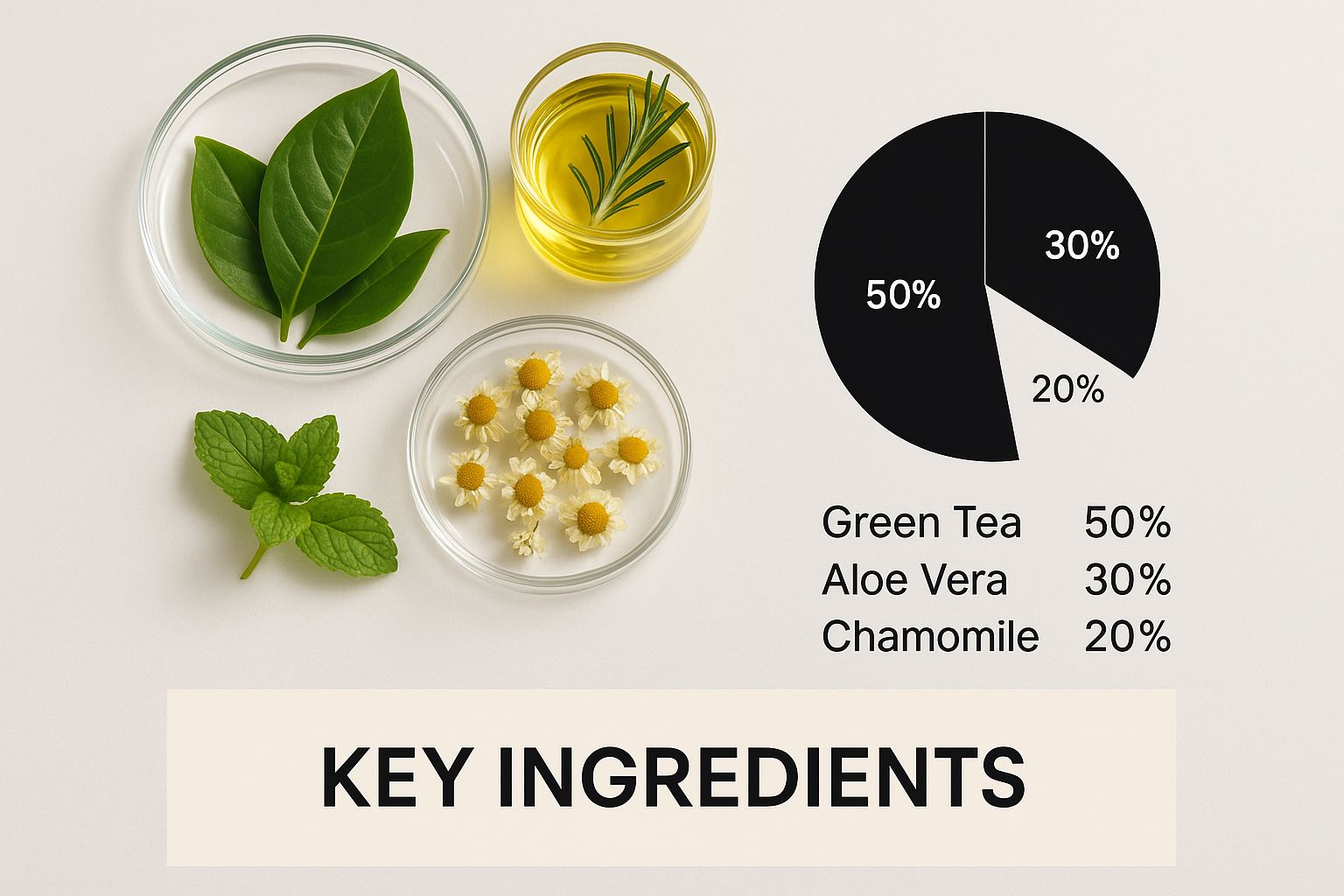
As you can see, pure, plant-derived ingredients are a cornerstone of many gentle formulas. But here comes the critical safety warning: oil degrades latex. This means oil-based lubes can cause latex condoms to fail or tear, so they should only ever be used with polyurethane condoms or when condoms aren't part of the picture.
Hybrid Lubricants: The Best of Both Worlds?
Hybrid lubes try to give you the best of both water and silicone. They start with a water base and mix in a dash of silicone. The result is a creamy, slick formula that lasts longer than a typical water-based lube but still cleans up easily.
Think of hybrids as the perfect middle ground. They offer the endurance of silicone with the easy cleanup and toy safety of water-based formulas, making them a fantastic all-rounder.
Because the silicone content is low, most hybrids are safe with silicone toys (but always double-check the label!). For someone with sensitivities, a hybrid that's free of glycerin, parabens, and fragrances can strike that perfect balance between high performance and pure comfort. Ultimately, your body is the final judge, so don't hesitate to experiment to find what feels best for you.
To help you see everything at a glance, here’s a quick comparison of how these lubricant types stack up for sensitive skin.
Lubricant Types Compared for Sensitive Skin
This table breaks down the key pros and cons of each lubricant type to help you make an informed choice based on your specific needs.
| Lube Type | Pros for Sensitive Skin | Cons for Sensitive Skin | Best For |
|---|---|---|---|
| Water-Based | Easy cleanup, toy-safe, condom-compatible. Feels light and natural. | Can dry out quickly. Some formulas contain irritants like glycerin or parabens. | Everyday use, use with all toys, and when you need easy cleanup. |
| Silicone-Based | Very long-lasting and waterproof. A small amount goes a long way. | Can degrade silicone toys. Requires soap and water to clean. | Extended sessions, water play, and users who don't want to reapply. |
| Oil-Based | All-natural ingredients, very moisturizing and long-lasting. | Not safe with latex condoms. Can be messy and stain fabrics. | Condom-free intimacy and as a moisturizing massage oil. |
| Hybrid | Long-lasting glide with easier cleanup. Most are silicone-toy safe. | Can be pricier. Still need to check labels for potential irritants. | Users who want longer-lasting glide than water-based but easier cleanup than silicone. |
Choosing the right lubricant for sensitive skin is a personal journey. By understanding these fundamental differences, you're well-equipped to find a product that enhances comfort and intimacy without causing irritation.
How to Read an Ingredient Label Like a Pro
The secret to finding a truly body-safe lube for sensitive skin is hiding in plain sight: the ingredient list. Learning to decode that label is the single most powerful thing you can do to find lasting comfort. Don't get bogged down by long chemical names. Think of it like shopping for high-quality skincare—the best stuff often has the shortest, most recognizable ingredient list.
This simple shift in perspective helps you zero in on what really matters. You're not just looking for something slick; you're looking for a formula with ingredients that will actually soothe and hydrate your body. Once you know how to spot the good guys, you can pick a lube that works with you, not against you.
Spotting the Hero Ingredients
When you scan a label, a few key ingredients should immediately put you at ease. These are the gentle, effective components known for being kind to skin.
Keep an eye out for these power players:
- Aloe Vera: Famous for its calming and healing properties, aloe is a fantastic foundation for a water-based lubricant. It offers a natural, soothing glide that’s perfect for skin that gets irritated easily.
- Hyaluronic Acid: This is a hydration superstar you’ve probably seen in high-end face serums. It’s brilliant at holding onto moisture, which gives the lube a long-lasting, cushiony feel without any stickiness.
- Plant Extracts: Things like chamomile, oat, or calendula extracts are added for their anti-inflammatory and soothing benefits. They actively help calm down sensitive tissues.
Choosing a lubricant with these ingredients is like upgrading from a basic moisturizer to a nourishing serum. It’s about picking a formula that doesn’t just do its job, but also genuinely cares for your delicate skin. Just as you’d want trusted ingredients for your face, the same logic applies here. If you're also looking for toys that follow a body-safe philosophy, our guide on how to choose a vibrator shares similar tips on sticking with high-quality materials.
Demystifying pH Balance and Osmolality
Beyond the ingredient list, two slightly more technical terms are absolute game-changers for anyone with sensitive skin: pH balance and osmolality. Don't worry, they sound way more complicated than they are, but understanding them makes a huge difference.
Think of it this way: Your intimate tissues maintain a very specific, finely tuned internal environment. The wrong lube can throw everything off, like a loud alarm blaring in a quiet library. A good lube works in harmony with your body, not against it.
A healthy vaginal pH is naturally acidic, usually somewhere between 3.8 and 4.5. A lubricant formulated to match that pH helps maintain this delicate balance, which is your body’s first line of defense against irritation and infections like bacterial vaginosis or yeast infections.
Why Osmolality Matters for Comfort
Osmolality is the other piece of the puzzle. It’s basically a measure of how concentrated a formula is with particles like salts and sugars. If a lube has a high osmolality (we call this hyperosmotic), it can actually pull moisture out of your cells. This can lead to dehydration, irritation, and even minor tissue damage over time.
What you want is an iso-osmotic lubricant. This means its concentration matches your body’s cells, creating a perfectly balanced environment where the lube hydrates tissues without disrupting them. A formula that respects your body’s natural chemistry is the key to a truly comfortable experience.
This growing awareness of intimate health science is changing the entire market. Valued at USD 1,586 million in 2024, the global personal lubricant industry is projected to hit nearly USD 2,772.8 million by 2030. This boom is driven by a massive shift toward smarter, body-safe products designed specifically for people with sensitive needs. You can learn more about the growth of the personal lubricant market and its increasing focus on these thoughtful formulations.
Red Flag Ingredients to Avoid for Sensitive Skin
Knowing what to look for in a lube for sensitive skin is only half the battle. You also need to know what to run from. Many popular lubricants are loaded with additives that can spell trouble for delicate intimate tissues, even if they're common in other products.
Think of this as your "do not fly" list for lube ingredients. It’s not about fear-mongering; it's about giving you the knowledge to confidently scan a label and choose a product that puts your comfort first.
Glycerin and Propylene Glycol
Glycerin is basically a sugar alcohol. It's tossed into a lot of water-based lubes to make them slicker and longer-lasting. The catch? Its sugary nature can throw your natural vaginal pH out of whack. This creates a perfect playground for yeast, which can lead to frustrating yeast infections, especially if you're already prone to them.
Then there's propylene glycol, another common moisture-retaining ingredient. For many people, though, it's a known skin irritant. If you've ever used a lube and felt a distinct burning or stinging sensation, there's a good chance this was the culprit.
Parabens and Harsh Preservatives
You've probably seen "paraben-free" on lots of cosmetic labels, and for good reason. Parabens, like methylparaben or propylparaben, are preservatives that stop bacteria and mold from growing in the bottle. While that's great for shelf life, they're also known irritants that can be absorbed through the skin.
Another one to watch out for is chlorhexidine. It’s a powerful antiseptic that’s simply too aggressive for intimate skin. It can wipe out the good bacteria that maintain a healthy vaginal microbiome, leaving you more vulnerable to irritation and infection.
Synthetic Fragrances and Flavors
Scented or flavored lubes might sound like a fun idea, but they are often a one-way ticket to irritation. The simple word "fragrance" or "parfum" on an ingredients list can represent a hidden cocktail of dozens of different chemicals, many of which are well-known allergens.
Your intimate areas are incredibly delicate and highly absorbent. Adding unnecessary chemicals like artificial scents is like spraying perfume on a sunburn—it’s only going to make things worse.
When it comes to lube, boring is better. Stick with simple, unscented formulas. Even so-called "natural" flavors can cause a reaction. Your safest bet is always a lube for sensitive skin that is completely free of added scents, colors, or flavors.
A Quick-Reference Checklist of Ingredients to Avoid
Keep this simple list in mind when you're shopping. If you spot any of these ingredients on the bottle, it’s probably best to put it back on the shelf and find something kinder to your body.
- Glycerin: A sugar that can feed yeast and lead to infections.
- Propylene Glycol: A common skin irritant known to cause burning.
- Parabens: Preservatives (e.g., methylparaben) that can trigger skin reactions.
- Fragrances/Parfum: A catch-all for mystery chemicals and common allergens.
- Petroleum/Mineral Oil: These can coat the skin, trapping bacteria and disrupting natural moisture.
- Chlorhexidine: A harsh antiseptic that destroys healthy vaginal flora.
- Nonoxynol-9: A spermicide that is notoriously irritating to sensitive tissues.
By steering clear of these red-flag ingredients, you dramatically improve your odds of finding a lube that feels amazing and works in harmony with your body. For a look at formulas that get it right, check out our guide to some of the best pjur lubes to see examples of high-quality, body-safe options. The golden rule is always the same: read the label and keep it simple.
Safely Choosing and Testing a New Lubricant
Alright, you've done your homework. You know which ingredients are your friends and which ones are definite villains on a lube label. Now comes the fun part: picking a new lube for sensitive skin and making sure it’s the right one for you. This final step is all about trusting your gut—and your skin.
It’s tempting to grab anything with "natural" or "dermatologist-tested" on the bottle. While those labels can be helpful, they’re not a golden ticket. The only thing that truly matters is how your body reacts. That's why your best bet is to scrutinize the ingredient list and always, always do a quick safety check before going all in.
The Patch Test: Your Non-Negotiable Safety Step
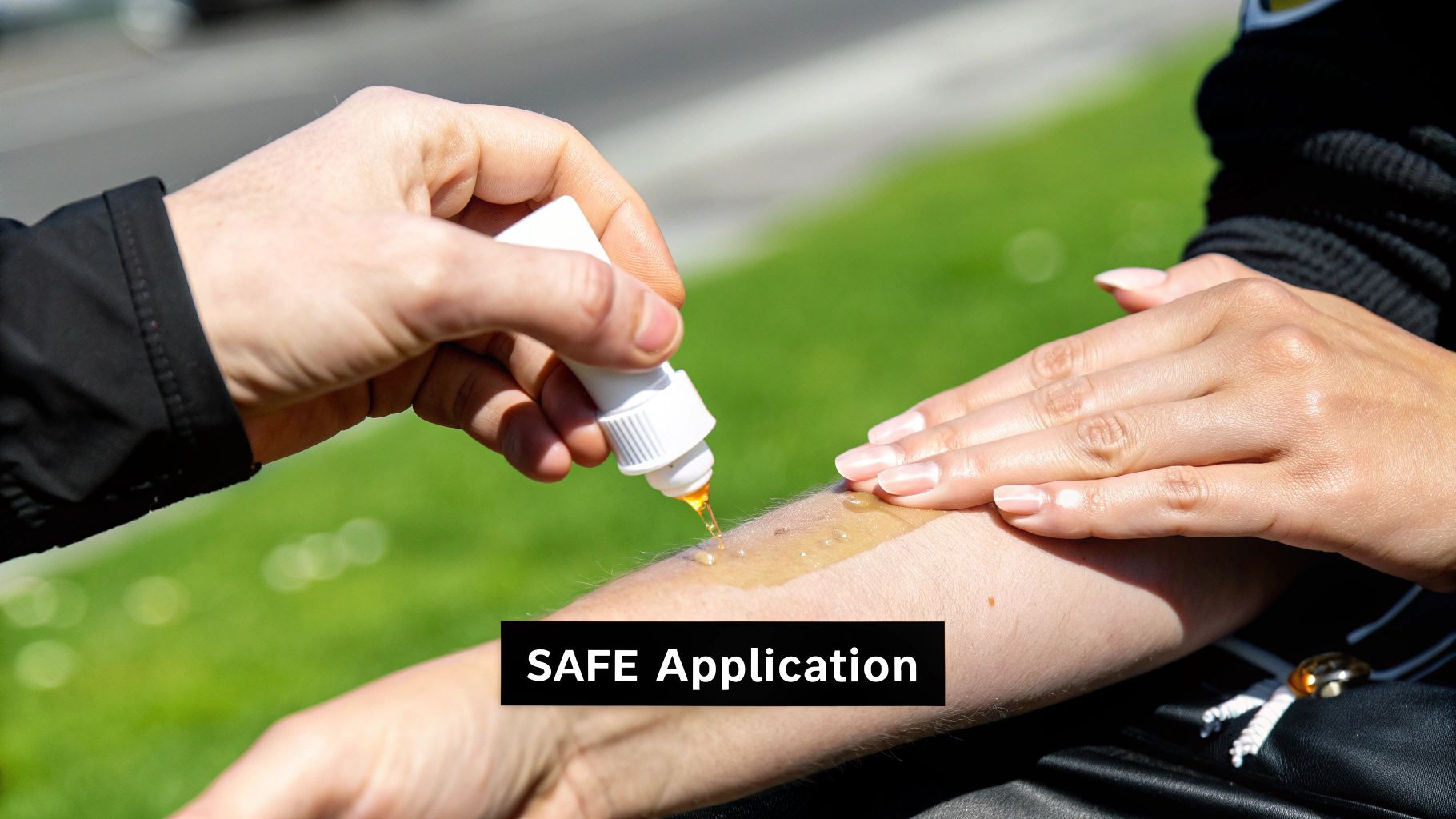
Before you introduce a new lubricant to your most intimate areas, the single most important thing you can do is a patch test. Think of it as a sneak peek or a dress rehearsal for your skin. It’s a super simple, zero-risk way to see how you'll react to a new formula without, well, ruining the mood later.
This is especially crucial if you have known allergies, deal with skin conditions like eczema, or just have a history of reacting to new lotions and potions. It literally takes a minute and can save you from a world of hurt.
A patch test is your personal safety net. It lets you screen a new lube for any red flags before they have a chance to cause trouble, giving you total peace of mind.
Here’s how to do it right:
- Pick a Test Spot: Dab a small, dime-sized amount of the lube onto the skin of your inner forearm or wrist. This skin is sensitive enough to give you a good read but is also safely out of the way.
- Wait and Watch: Just leave it be for at least 24 hours. Don't wash it off.
- Check for a Reaction: After a day, take a close look. See any redness, itching, bumps, or feel any burning? Wash it off immediately and toss the bottle. If the coast is clear and your skin looks and feels totally normal, you’re good to go.
Looking Beyond the Label
As you shop for a new lube for sensitive skin, keep in mind that you're not alone. The demand for gentle products is massive—the global sensitive skin product market was valued at an incredible USD 42.16 billion in 2024. With North America making up over 40% of that market, companies are paying attention and creating better, safer options. You can dive deeper into the trends in the sensitive skin product market to see how this consumer-driven focus is changing the game.
This explosive growth means you have more fantastic choices than ever before. If you're looking for something tailored to a specific type of play, it's also worth seeing how formulas are tweaked for different needs. For instance, you can check out our guide to the best numbing anal lube to see how different body-safe ingredients are used to create specific effects.
By arming yourself with ingredient knowledge and making patch testing a regular habit, you can navigate the world of personal lubricants with confidence and find the perfect partner for your body.
Your Questions About Sensitive Skin Lube Answered
We've explored everything from decoding ingredient labels to spotting red flags, but you probably still have a few questions. That’s perfectly normal. To help you feel completely confident, let's go through some of the most common questions people ask when looking for the right lube.
Can I Just Use Coconut Oil as a Natural Lube?
It’s tempting to reach for something simple and natural like coconut oil, but this is one of those times when a DIY solution can backfire. The biggest problem is safety: oils and latex condoms do not mix. The oil can actually degrade the latex, causing it to weaken or even break.
On top of that, oils are notoriously hard to wash off completely. Any residue left behind can trap bacteria against your delicate skin, potentially leading to irritation or even an infection. For real peace of mind, it's always best to stick with a product that was specifically formulated and tested for intimate use.
What Is a Hypoallergenic Lubricant?
When you see the word hypoallergenic on a bottle of lube, it simply means the formula was intentionally created to minimize the risk of an allergic reaction. For sensitive users, this usually means the product is free from the most common troublemakers.
You'll typically find these are formulated without:
- Synthetic fragrances
- Artificial colors or dyes
- Parabens
- Glycerin
Think of "hypoallergenic" as a helpful filter. It isn't a 100% guarantee against a reaction, but choosing a hypoallergenic lube dramatically lowers the odds of irritation, making it a much smarter starting point for anyone with sensitive skin.
Does Dermatologist-Tested Mean It Is Safe for Me?
Seeing "dermatologist-tested" on a label is definitely a good sign. It means the product was evaluated for its potential to cause irritation on human skin, all under the watchful eye of a medical professional. This gives the product’s safety claims an extra layer of credibility.
However, it's not a personal guarantee for your unique body. Everyone's skin chemistry is different. Treat that label as a strong recommendation, but always double-check the ingredient list yourself and run a quick patch test before going all in.
Why Does Some Lube Cause a Burning Sensation?
That stinging or burning feeling is your body's way of sending up a flare signal—something in that formula is not right for you. It's an immediate "nope!" from your skin.
Usually, the culprits are specific ingredients known to be irritating.
- Propylene Glycol: This one is a very common offender, notorious for causing a warming or burning sensation in people with sensitivities.
- Harsh Preservatives: Some ingredients, like chlorhexidine, can be far too aggressive for delicate intimate tissues.
- Fragrances: The chemicals used to create those lovely scents are prime suspects for causing immediate irritation and allergic reactions.
There’s also a more scientific reason: osmolality. If a lube is "hyperosmotic," it has a high concentration of particles that literally pull moisture out of your cells. This dehydration at a cellular level feels just like a burn. Switching to a pH-balanced, iso-osmotic, and glycerin-free formula is often the permanent fix for this problem.
Is It Normal for Lube to Get Sticky?
Ah, the dreaded stickiness. This is a super common complaint, particularly with some water-based lubes. It typically happens as the water in the formula starts to evaporate or get absorbed by your skin, leaving behind a tacky residue.
If your lube gets sticky in a flash, you might be using a formula with glycerin or other sugar-based ingredients. A great lube for sensitive skin will often rely on ingredients like hyaluronic acid or aloe vera to provide that smooth, long-lasting glide without the tackiness. If you want to avoid the issue altogether, a high-quality silicone or hybrid lubricant will give you a much longer playtime without drying out.
How Do I Know if I Am Allergic to a Lubricant?
An allergic reaction can show up in a few different ways, from mildly annoying to seriously uncomfortable. If you notice any of these signs, stop using the product right away.
Keep an eye out for:
- Redness or a rash where the lube was applied.
- Itching or swelling that doesn’t go away after you’ve cleaned the area.
- A burning or stinging sensation that just won't quit.
- The appearance of small bumps or hives.
This is exactly why that patch test we keep mentioning is so important! Testing a new product on a small patch of skin on your arm first lets you screen for a reaction without risking discomfort in your most sensitive areas.
Ready to find a lubricant that offers pure comfort and peace of mind? At My Luxury Toys, we've curated a collection of high-quality, body-safe lubricants specifically designed for sensitive skin. Explore our selection and discover the perfect formula to enhance your intimate moments without irritation.
Shop Our Body-Safe Lubricants Now