

A Guide to Sex Education for Couples: Deeper Intimacy & Connection

Are you and your partner looking to deepen your connection, but feel like something is missing in your intimate life? Maybe you feel like you should know how to make everything perfect, but the reality is more complicated. You're not alone, and it's not about fixing something that's broken. True sex education for couples isn't about awkward high school biology; it's about building a partnership that is more connected, trusting, and deeply satisfying for both of you.
This guide provides actionable solutions to help you and your partner build a shared language for intimacy. Think of it as an ongoing conversation that strengthens your bond, giving you the tools to navigate every stage of your relationship with confidence and real understanding. Let's explore how you can learn and grow together.
Why Sex Education for Couples Is So Important

So many of us feel a silent pressure, thinking we should instinctively know how to make intimacy work perfectly. But the truth is, what feels amazing in year one might not be what you both need by year five or ten. Desire, communication, and pleasure are always evolving, and acknowledging that journey is a healthy and powerful way to keep your connection vibrant.
It’s like having a shared roadmap for your intimate life. Without one, you’re just guessing, making it easy to get lost or feel disconnected. But when you build that map together, you can navigate the path with intention, leading to mutual satisfaction and a much deeper emotional bond. Truly, continuing education about sex is one of the best investments you can make in your relationship's health.
Unlearning Outdated Myths
Let’s be honest: one of the biggest hurdles is the baggage from the "sex ed" we received when we were younger. It was often incomplete, shame-based, and focused almost entirely on preventing pregnancy or STIs. Pleasure, real intimacy, and enthusiastic consent were rarely discussed.
Sex education for couples isn't about fixing something broken. It's about upgrading your toolkit for connection. It gives you a shared language to talk about desires, boundaries, and curiosities without fear or shame.
This process is incredibly freeing. It allows you to consciously decide what feels good and right for your relationship, rather than following outdated scripts or what you think you're supposed to be doing. You get to define intimacy on your own terms.
Creating a Shared Language for Your Needs
Communication is the absolute bedrock of great intimacy. But talking about sex can feel awkward and vulnerable, even with the person you love most. A little education provides a framework and a vocabulary that makes these conversations easier and more productive.
It helps you get specific. For example, you can move past the classic "I'm not in the mood," which can leave a partner feeling rejected. Instead, you can have a more nuanced conversation about different types of desire—like spontaneous versus responsive—and find creative ways to connect that honor where you both are. This shared language builds trust and psychological safety, which is essential for a fulfilling intimate life.
Building Your Foundation with Core Concepts

Before building a more satisfying intimate life, you need a solid foundation. This means going beyond the basics and getting familiar with concepts that truly matter for couples in long-term relationships. When you create a shared vocabulary, you can discuss sensitive topics without blame or confusion.
Think of it like learning the rules of a new game you’re excited to play together. The game is more fun—and you feel more like a team—once you both know the objectives and how to communicate. This shared understanding is the starting point for the ongoing journey of sex education for couples.
Rethinking Enthusiastic Consent
Consent is a word we all know, but in a long-term relationship, it’s more than a simple "yes" or "no." We're talking about enthusiastic consent—not a one-time permission slip, but an ongoing, excited dialogue. It’s the difference between a partner passively going along and one who is genuinely, joyfully participating.
It’s like planning a vacation. One person might say, "Sure, that sounds fine," but the other is buzzing with ideas. The first response is mere agreement; the second is genuine enthusiasm. In your intimate life, that’s what you’re aiming for. This shift ensures you both feel wanted, heard, and present, making your time together profoundly more connected.
Understanding Spontaneous vs Responsive Desire
One of the most common friction points for couples is a desire mismatch. Often, one partner experiences spontaneous desire, where the urge for sex seems to appear out of nowhere. The other partner might have responsive desire, where their interest is sparked by arousal, emotional connection, or sensual touch.
It’s crucial to understand that neither is right or wrong; they’re just different operating systems. Getting this distinction can be a massive relief, dissolving the hurt feelings that build up when one person feels constantly turned down and the other feels constantly pursued.
A partner with responsive desire isn't "broken." Their desire simply needs the right context to awaken. It's like a garden that needs watering to bloom, rather than a switch that can be flipped on command.
Once you know this, you can work together to create those moments of connection that help responsive desire flourish. Maybe it’s scheduling intimate time or starting with non-sexual touch. If you're looking for fresh ideas, our guide on bonding through erotic play has some creative ways to get started.
Closing the Pleasure Gap
You may have heard of the pleasure gap, and it’s a real thing. It describes the common disparity in sexual satisfaction—specifically, the different orgasm rates between men and women in heterosexual relationships. The good news? This isn't a biological destiny. It’s usually the result of an incomplete education that has long prioritized certain types of stimulation.
A huge part of modern sex education for couples is working together to close this gap. This takes open communication, curiosity, and a willingness to explore what feels amazing to both of you. It's about letting go of outdated ideas and embracing a richer definition of a fulfilling sexual experience.
This intentional learning mirrors what’s needed in formal education. After all, foundational knowledge is key. Global studies show that teachers are often a preferred source for sex ed, with up to 90% of children in Malaysia and 88% in Cambodia naming them as their primary source. You can dive deeper into these findings on global sex education. Just as a structured approach helps young people, it can help couples fill their own knowledge gaps to build a more equal and pleasurable intimate life.
Mastering the Art of Sexual Communication
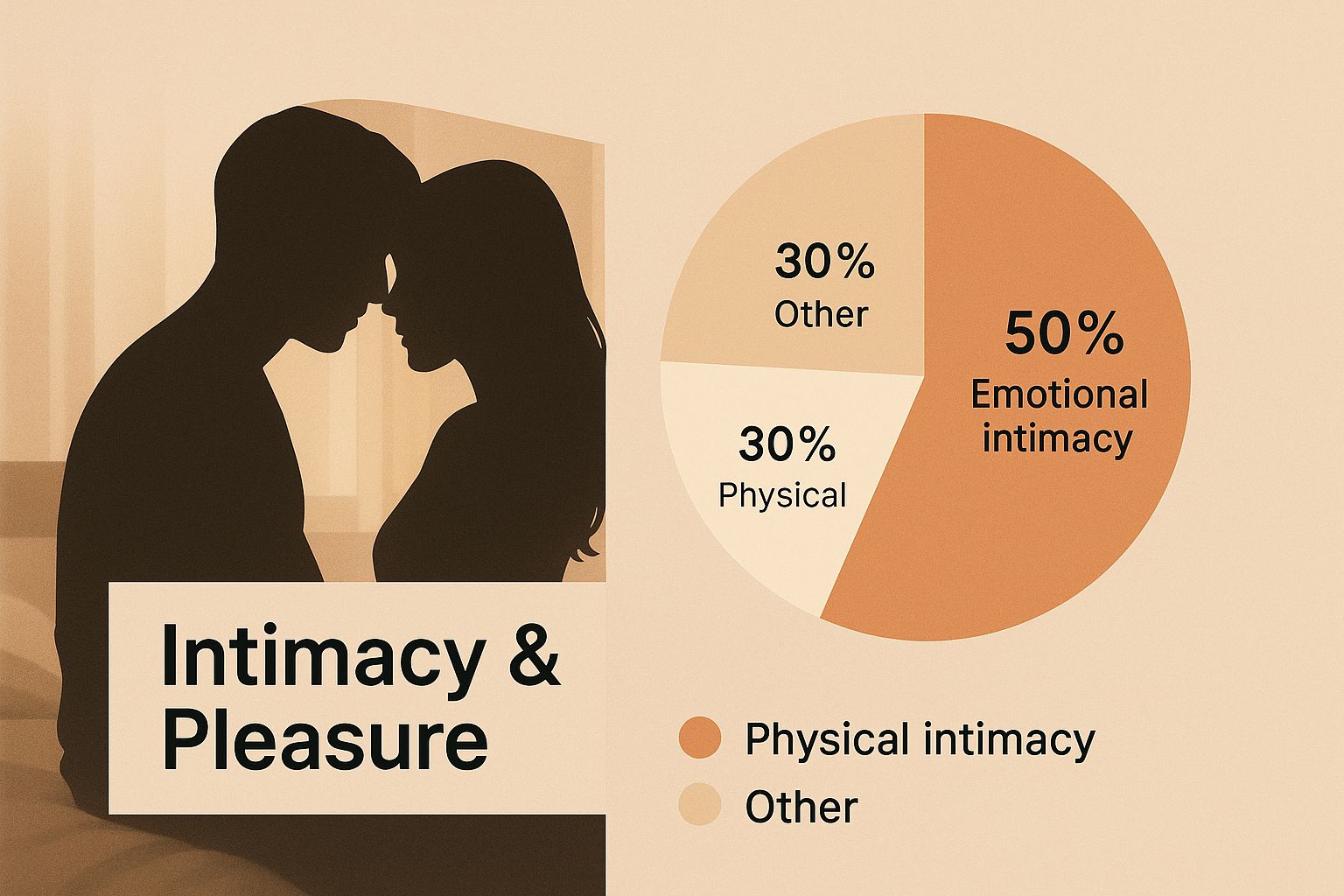
True pleasure in a relationship is built on open communication and mutual understanding. A thriving intimate connection is only possible when both people feel safe enough to be vulnerable, sharing their desires and boundaries without fear of judgment.
Let's be honest, though. Talking about sex can feel awkward. This is where ongoing sex education for couples really shines. It's about transforming potentially stressful talks into powerful moments of connection. The best part? Communication is a skill you can learn and improve together.
Creating a Safe Space for Dialogue
Before you dive into specifics, you have to set the stage by creating an environment of psychological safety. The right time and place are crucial—so, not in the middle of an argument or when one of you is stressed. Think of these conversations as a collaborative project, not a performance review.
A simple shift in how you start the conversation can make all the difference. Instead of "We need to talk," try something that feels like an invitation. Saying, "I'd love to set aside some time just for us to connect and talk about what feels amazing for both of us," immediately shifts the focus from fixing a problem to exploring shared pleasure.
Practical Frameworks for Better Conversations
Vague complaints like "I wish things were more exciting" often lead nowhere. Specific, thoughtful language is what leads to breakthroughs. Using a framework can give your thoughts structure, making it easier to say what you truly mean.
1. The "Feedback Sandwich" for Constructive Suggestions
No one wants to make their partner feel inadequate. The feedback sandwich works by wrapping your request between two pieces of genuine appreciation.
- Positive Opener: Start with something you sincerely love. "I absolutely love how passionate our make-out sessions are."
- The Request: State your desire clearly and gently. "And I'd love it if we could try incorporating more [specific action] for me during that time."
- Positive Closer: End on a unifying note. "I think it would make things even more incredible for both of us."
2. "Desire Mapping" to Articulate Your Wants
Sometimes, the hardest part is figuring out what you actually want. Desire mapping is a fantastic exercise—done alone or together—to get crystal clear on your unique turn-ons. It goes beyond physical acts to explore the emotional and situational elements that create arousal.
Think of desire mapping as creating a "pleasure profile" for yourself. It’s a way to understand the full picture of what makes you feel connected and aroused.
You can create a list by asking yourselves questions like:
- When do I feel the most desired?
- What non-sexual things make me feel closer to my partner?
- What fantasies am I curious about?
- What words or phrases turn me on?
Sharing your desire maps with each other is like being handed a personalized guide to your partner's inner world, helping you build a more fulfilling sex life.
Transforming Your Sexual Communication
| Unproductive Habit | Productive Alternative | Why It Works |
|---|---|---|
| Making Assumptions | Asking Curious Questions | It replaces guesswork with real information, showing you value your partner's unique experience. |
| Using "You Always/Never" | Using "I Feel" Statements | It shifts from blame to personal feeling, inviting empathy instead of defensiveness. |
| Hinting or Being Vague | Being Specific and Direct (Gently) | It provides clear, actionable information your partner can actually use to please you. |
| Talking During Sex Only | Setting Aside Dedicated Time | It removes the pressure of the moment, allowing for a more relaxed and thoughtful conversation. |
| Focusing Only on Problems | Celebrating What Works | It reinforces positive behaviors and builds a foundation of appreciation, making suggestions feel less critical. |
These communication habits move you from a place of conflict to one of collaboration and shared discovery, strengthening your entire relationship.
Navigating Common Changes in Your Sex Life
Every long-term relationship hits seasons of change that affect the bedroom—and that’s completely okay. A promotion, a new baby, a health diagnosis, or just the natural rhythm of aging can all stir up the dynamics of intimacy.
So many couples worry when their connection feels different, thinking something is broken. But these moments aren't roadblocks; they're invitations to adapt, deepen your bond, and discover new ways to connect. This is what ongoing sex education for couples is all about—learning to grow together.
When Stress and Busyness Take Over
One of the biggest passion-killers for modern couples is chronic stress and a packed schedule. When you’re both running on fumes, desire can feel like a distant dream. It's easy to slip into a routine where intimacy is the last item on a never-ending to-do list.
This is where you have to flip the script. Instead of hoping for a spontaneous moment, get intentional. Scheduling sex might sound clinical, but think of it differently: you are carving out sacred time for your connection. You're consciously choosing to put each other first, and that is incredibly romantic.
Adapting to Physical and Health Changes
Our bodies change. Whether you're navigating postpartum recovery, menopause, a chronic illness, or new physical limitations, these things can have a huge impact on your sex life. The most important thing here is kindness—for yourself and your partner.
- Post-Baby Adjustments: Focus on rediscovering each other's bodies with fresh eyes and patience.
- Aging and Health Issues: Talk openly about what feels different and what you’re curious to try now.
- Libido Fluctuations: Remember that desire ebbs and flows. A lower libido is rarely a personal rejection; it's usually tied to hormones, stress, or health.
Think of your intimate life not as a fixed destination but as a landscape you explore together. The goal is to keep exploring, together.
Learning to adapt can also be an amazing opportunity to bring new things into the bedroom. Our guide on bonding through erotic play has great, low-pressure ideas for couples looking to reconnect.
A Global Perspective on Education
The need for this kind of adaptive, lifelong learning about sexuality is recognized worldwide. There’s a major global push for better sex education policies. A 2025 survey of 155 countries revealed that 85% have policies or laws related to sexuality education.
The problem? The quality and accessibility of this information vary, leaving many without the real-world tools they need. You can read more about these sex education statistics to see just how critical this is. For couples, it means we must be proactive and take the initiative to fill in the gaps ourselves.
Expanding Your Horizons and Exploring Pleasure
Once you've built a solid foundation of communication and trust, it's time for the fun part: exploration. Real intimacy is about sharing joy, laughter, and new experiences together. This is your chance to expand what a satisfying sex life looks like for you.
Many couples get into a rut where "sex" means only one or two specific activities. Break free by introducing a ‘sexual menu.’ Think of it like a restaurant where you always order the same dish. Your sexual menu can include everything from a sensual massage to oral sex and intercourse—all as valid, fulfilling choices.
Introducing New Tools for Discovery
High-quality sex toys can be incredible tools for shared discovery. They aren’t meant to replace your connection but to enhance it, acting as fun aids in your exploration. Think of them as a way to add new textures, sensations, and possibilities to your sexual menu.
Using toys is a healthy, normal, and exciting part of a modern sex life. For many couples, they offer a low-pressure way to learn more about each other's bodies.
Sex toys are like a new set of paintbrushes for an artist. You can create beautiful art with the brushes you have, but new ones introduce different strokes and techniques. They simply expand your creative potential.
Adopting this shame-free mindset is key. When you see toys as educational and recreational tools, they become a positive, exciting addition to your relationship.
Starting Your Journey with Sex Toys
If you're new to sex toys, the idea might feel daunting, but it doesn't have to be. Starting with beginner-friendly options can make the process fun and approachable.
- For Understanding Anatomy: A simple wand or bullet vibrator can be an amazing teacher, helping you both pinpoint what kind of touch feels best.
- For Shared Sensations: Couples' vibrators, often worn during intercourse, can introduce incredible new feelings for both partners at the same time.
- For Exploring New Erogenous Zones: From prostate massagers to clitoral suckers, the possibilities are endless.
Bringing new elements into your relationship can be a playful bonding experience. If you’re wondering how to start, our step-by-step guide to introducing sex toys for couple’s intimacy offers gentle, practical advice. Approach it with curiosity and an attitude of, "Hey, let's try this together."
Your Action Plan for Lifelong Intimacy
So, we've covered a lot. You have the concepts and communication tools to make your intimacy thrive. But knowledge is only powerful when you use it. Now it's time to put this insight into practice.
This guide is a starting block, not a finish line. The magic happens when you and your partner commit to staying curious and putting in the effort together. It’s about weaving these conversations into the fabric of your relationship.
Your Starting Checklist for Growth
Diving in doesn't have to be a monumental task. Small, consistent steps build the most momentum.
Here’s a simple checklist to get the ball rolling:
- Schedule a "State of Our Union" Chat: Put something on the calendar, but keep it low-pressure. The goal is to check in, celebrate what’s working, and talk about what you’re both curious to explore.
- Try One New Communication Technique: The next time a tricky topic comes up, try using an "I feel" statement or the feedback sandwich.
- Explore a Shared Resource: Pick a book, podcast, or even this article to read together. This gives you a natural starting point for discussion.
The most crucial takeaway is that sex education for couples is not a course you pass, but a conversation you continue. It's a living, breathing part of a healthy partnership.
Keeping the Spark Alive Through Discovery
This ongoing process of learning and adapting prevents a relationship from feeling stale. It's about being proactive rather than just reacting to problems. When you intentionally carve out space for discovery, you're building a bond that’s dynamic and resilient.
Most of us never got a great education on this topic. School focused on preventing risks, not cultivating pleasure. That means it’s on us, as adults, to fill in the gaps and find information that will help our relationships thrive. To help you on your way, exploring curated tools can be a game-changer.
Ready to take the next step? Browse our collections at My Luxury Toys to discover the perfect tools for your shared journey.
Frequently Asked Questions About Sex Education for Couples
Starting this journey of shared sexual discovery is exciting, but it's also normal to have questions. You're not alone. Here, we’ll tackle some of the most common concerns couples have with clear, straightforward answers.
Many couples wonder how to even begin. The most important thing to remember is that you're a team. This isn't about fixing something broken; it's about building something even better, together.
How Do We Start This Conversation if It Feels Awkward?
The trick is to start small and pick a low-pressure moment. Don't spring this on your partner when they're stressed.
Instead, frame it as a positive team goal. Try saying, "I've been thinking about how we can make our connection even stronger, and I'd love for us to explore that together." Suggesting you read an article like this one or try a fun couples' question game can be a great icebreaker. The key is to make it feel like a collaborative project, not a personal critique.
What if My Partner Isn't Interested in This?
If your partner pumps the brakes, try to get curious instead of defensive. Gently try to understand their hesitation. They might hear "sex education" and flash back to an awkward class, or worry you think there's a problem.
Reassure them that this is about enhancing what you already have—making your intimate life more fun and fulfilling for both of you. You can even frame it as learning each other's "love language" on a new level.
Are Sex Toys Necessary for a Good Sex Life?
Absolutely not. A fantastic sex life is built on communication, intimacy, and trust. Think of sex toys as optional accessories, not requirements.
That said, they can be amazing tools for exploration and fun. Toys can introduce new sensations and help you both learn more about each other in a playful way. If you're curious, reading up on some essential safety tips for couples' toys can help you start with confidence.
Good education makes a real difference. For example, countries with comprehensive sex ed programs often see teenage pregnancy rates drop by as much as 50%. Yet, a surprising 41% of young adults worldwide still don't have accurate information on contraception, which just goes to show that learning is a lifelong process. You can learn more about these impactful sexual health statistics.
At My Luxury Toys, we believe exploration is a huge part of a vibrant, connected partnership. That's why we offer a curated collection of high-quality pleasure products designed to support your journey of discovery.
Explore our collections and find the perfect tools to enhance your intimacy.