

A Real Guide to Building Intimacy in Relationships

Are you feeling disconnected from your partner, even when you’re in the same room? Do you wonder how to bring back the closeness you once had, or how to go deeper than just physical touch? Many couples find themselves feeling more like roommates than soulmates, and it's a common, quiet struggle.
The truth is, genuine intimacy is the very glue that holds a resilient, deeply satisfying partnership together. It's not just about sex; it’s about creating a profound sense of connection, trust, and closeness. It's the feeling of being truly seen, heard, and valued for who you are. This guide offers actionable, helpful solutions for building intimacy in relationships and forging a bond that lasts.
What Building Intimacy in Relationships Really Means
Let's be honest: the word "intimacy" gets thrown around a lot, and most people immediately think it's just about sex. But that's only one piece of the puzzle. When couples start to drift apart, it's rarely because of one big dramatic event. More often, it's a slow, quiet erosion of closeness.
Little by little, communication gaps widen and personal desires fall out of sync. This is exactly why understanding the different facets of connection is so critical. Building intimacy in relationships isn't a final destination; it's a continuous, beautiful journey of growing closer together, day by day.
The Four Pillars of Connection
A truly intimate relationship is a rich tapestry woven from different threads. If you only focus on one area, like the physical side, while neglecting the others, the whole relationship can start to feel unbalanced and fragile. To build a bond that can withstand anything, it’s essential to nurture all four key types of intimacy.
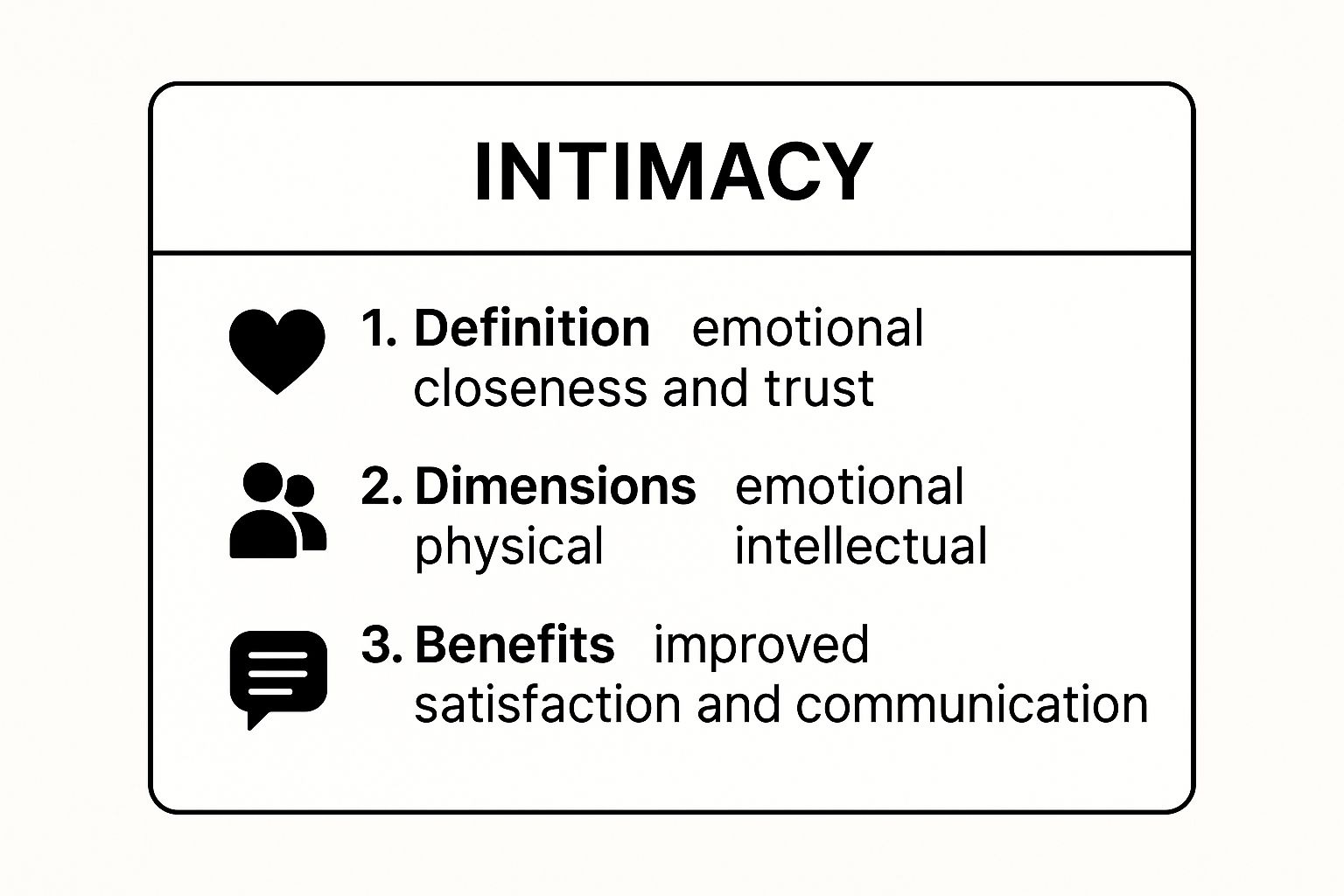
A healthy relationship needs attention across the board—emotional closeness, physical affection, and a shared understanding are all pieces of the puzzle that lead to greater satisfaction. We can break these down into four core areas, or "pillars," that support a strong partnership.
The Four Pillars of Intimacy
Here's a quick look at the different types of intimacy that couples can cultivate for a stronger, more well-rounded connection.
| Type of Intimacy | What It Looks Like | Why It Matters |
|---|---|---|
| Emotional | Sharing feelings, vulnerabilities, and dreams without fear of judgment. | This is the heart of your bond, creating a deep sense of trust and safety. |
| Physical | Everything from a warm hug and holding hands to a passionate sexual connection. | It's a powerful way to express care, desire, and affection through touch. |
| Intellectual | Connecting through big ideas, sharing opinions, and respecting each other’s minds. | This builds mutual respect and keeps the relationship intellectually stimulating. |
| Experiential | Creating memories and doing things together, from trying a new hobby to traveling the world. | These shared experiences build a unique history and a powerful sense of "us." |
Each pillar reinforces the others, creating a solid foundation that can weather life's inevitable storms.
Interestingly, research backs up just how crucial the emotional side is. While regular sexual activity can certainly boost happiness, studies consistently show that emotional intimacy is the more powerful factor in long-term relationship satisfaction. Couples who prioritize trust and open communication report feeling much more satisfied. You can explore more about how modern couples view connection.
Creating Space for Emotional Vulnerability
Emotional intimacy is the glue that holds a relationship together, especially when things get tough. It isn't built on grand, dramatic gestures. It's forged in the small, everyday moments when you choose to turn toward your partner instead of away.
Building intimacy in relationships is really about creating a safe harbor where both of you can be fully, unapologetically yourselves. True connection blossoms when you trust that your vulnerability will be met with empathy, not judgment. That kind of safety doesn’t just happen; you have to build it, brick by brick.

Go Beyond Surface-Level Questions
One of the fastest ways to deepen your emotional bond is to simply change the way you talk to each other. So many of us fall into the trap of asking the same old questions that only get one-word answers. Seriously, how often does "How was your day?" actually lead to a real conversation?
Instead, try framing questions in a way that invites stories and feelings. This subtle shift shows you’re truly curious about your partner's inner world.
Here are a few simple swaps to try:
- Instead of "Did you have a good day?" ask, "What was the most interesting part of your day?"
- Instead of "Are you okay?" try, "What's on your mind right now?"
- Instead of "Do you like this idea?" ask, "How do you feel about this idea?"
These kinds of questions open the door to much richer dialogue, helping you see your partner in a new light.
Master the Art of Active Listening
Active listening is a superpower in a relationship. It’s about more than just hearing words; it’s about tuning into the emotion and intent behind them. This requires you to be fully present—no phone scrolling, no mental grocery lists, and no planning your rebuttal.
When your partner is sharing, give them your complete focus. Afterward, reflect back what you heard. Something as simple as, "It sounds like you felt really unappreciated at work today. Is that right?" can make them feel truly seen and heard.
Key Takeaway: Validation isn't the same as agreement. You don't have to share your partner's perspective to accept that their feelings are real and valid for them. This is the cornerstone of emotional safety.
If you find that certain topics always seem to hit a nerve, it might be helpful to explore strategies for how to overcome intimacy issues. Fostering this kind of vulnerability is the foundation for a much deeper, more connected partnership.
Bringing Back Touch Beyond the Bedroom
When people think about physical connection, their minds usually leap straight to sex. But so much of a relationship's real intimacy is built on the quieter, everyday touches that create a steady, gentle current of affection between two people. It’s those small, non-sexual gestures that truly reinforce your bond.
Think about it for a second. A simple, lingering hug before one of you heads out the door. Holding hands while you're walking down the street. These moments might feel small, but they are incredibly powerful. Each one releases oxytocin—the "cuddle hormone"—which is vital for social bonding.

When you weave this kind of casual affection into your daily life, it builds a foundation of physical comfort that can actually take the pressure off sex. Touch becomes a language of love and support, not just a signal for more.
Reintroducing Everyday Micro-Affections
So, how do you bring this back when life gets busy? The trick is to start small with "micro-affections"—quick, simple gestures that fit naturally into your existing routine. You're not trying to force anything, just looking for authentic opportunities to connect.
Here are a few easy ideas to get you started:
- The 20-Second Hug: Before you both rush into your day, take an extra 20 seconds for a real, full-body hug. Don't rush it.
- Casual Couch Cuddles: When you're watching a show, make a conscious effort to sit closer or get tangled up under a blanket.
- The Passing Touch: As you walk past your partner, gently touch their arm, shoulder, or back. It's a silent way of saying, "I see you."
- Under-the-Table Contact: A simple foot rub or even just letting your feet touch under the table is a discreet way to connect.
These little acts add up, creating a powerful sense of togetherness over time. For many couples, smaller acts of affection like holding hands or cuddling boost overall satisfaction significantly. You can learn more about the critical link between sex, intimacy, and connection and how to navigate those challenges.
Key Insight: Consistent, non-sexual touch makes a relationship feel safer. It communicates care and affection without any strings attached, strengthening your emotional and physical bond at the same time.
Ultimately, these repeated, gentle gestures become the bedrock of a powerful physical connection. They remind you both that you're a team, one small touch at a time.
Navigating Desire and Sexual Connection
Let's be honest: talking about sex can be awkward, even with the person you share your life with. But it’s one of the most important conversations you can have. When we skip that conversation, it's easy for mismatched libidos and unspoken wants to create a quiet chasm between us.
A great sexual connection is almost always built on a foundation of emotional safety. If you don't feel heard when you're making dinner, it’s a huge ask to suddenly feel safe enough to be vulnerable in the bedroom. A strong sexual bond almost always starts by strengthening your emotional one first.
Opening the Dialogue About Desire
The hardest part is just starting. The trick is to pick a time when you're both relaxed and not in a charged moment. The real goal is to create a safe space where sex can be discussed just like you'd discuss finances or vacation plans.
A simple shift in language can make all the difference. Try using "I" statements to talk about how you feel. Instead of saying, "You never initiate," you could try, "I feel so desired when you reach for me first." This frames it as your feeling, not their failure, and opens the door for collaboration.
A Quick Tip: Think of these conversations as a continuous, gentle check-in, not a one-and-done deal. Our bodies and desires change over time. Staying connected means adapting together.
The Truth About Mismatched Libidos
It's incredibly common for partners to have different sex drives. Seriously. It’s not a red flag that your relationship is doomed; it's just a normal part of being human. Things like stress, health, kids, and work all play a huge role in our libido. Just knowing this can take so much of the blame out of the equation.
The data backs this up. Open communication is directly tied to sexual satisfaction. While about 74% of married couples say they're satisfied with their sex life, the ones who consistently report the highest levels of intimacy are those who talk about it. You can find more fascinating stats about how couples navigate their love lives on passivesecrets.com.
Why Scheduling Sex Isn't as Unromantic as It Sounds
I know, scheduling sex gets a bad rap. It sounds forced and anything but spontaneous. But for busy couples, it’s actually an incredibly powerful act of prioritizing each other. You're making a conscious choice to put your physical connection on the calendar.
Try to think of it less as a rigid appointment and more as intentionally creating a window for intimacy. It can build anticipation and takes away the pressure of waiting for a "perfect" spontaneous moment that might never arrive.
- It guarantees time together. When life gets crazy, scheduling ensures your physical connection doesn't fall to the bottom of the list.
- It reduces the fear of rejection. It helps avoid those painful moments where one partner initiates, and the other is just too tired.
- It builds anticipation. Knowing you have that dedicated time set aside can be a huge turn-on all day long.
Working through these topics is a core part of building a lasting partnership. For a deeper dive into how to align your needs, check out our guide on understanding sexual compatibility.
Building Your Bond Through Shared Experiences
Intimacy isn’t just about those deep, soul-baring conversations. It’s also built in the moments you’re having fun, learning something new, and making memories side-by-side. A huge part of building intimacy in relationships is getting outside your normal routine.
Routines are comfortable, but they can easily slide into a rut. Breaking out of that "dinner and a movie" cycle is a great reminder that you're a team, not just two people sharing a living space. Taking on a new challenge, even a small one, can reignite that playful spark.

Embrace Shared Discovery
Intellectual intimacy is about connecting on a mental level. It's about having a genuine respect for each other's minds and staying curious about what makes your partner tick. You definitely don't need a PhD to make this happen—just an open mind.
Experiential intimacy, on the other hand, is the bond you build through shared activities. It’s all those "remember when we did that?" moments that become the unique story of your relationship. It doesn't have to be some grand, expensive gesture. The meaning you find in the experience is what matters.
Fun Ideas For Any Budget
Bringing novelty into your relationship can be simple and affordable. It’s all about teamwork and discovering something new together.
- At-Home Adventures: Tackle a complex recipe you've always wanted to try. Or start a two-person book club.
- Low-Cost Outings: Plan a weekend hike on a new trail. Check out a local museum on a free-admission day.
- Intellectual Spark: Pick a documentary on a topic neither of you knows anything about and talk about it afterward.
Key Takeaway: Shared experiences, whether they're big adventures or small moments, create a unique history that belongs only to the two of you. This is the stuff a strong, lasting intimacy is built on.
By exploring new activities, you're actively investing in your connection. For couples who want to take this a step further, a more structured approach can work wonders. You can find connection-focused activities in our guide to intimacy exercises for couples.
Navigating Love and Connection in the Digital Age
Let's be honest, our phones are practically attached to us. This creates a weird paradox for relationships—they offer amazing ways to connect, but they can also build massive walls between us. We've all seen it: that couple at a restaurant, both staring into their screens, physically together but emotionally worlds apart.
This little habit, now known as "phubbing" (phone snubbing), can seriously erode intimacy. It sends a subtle message that whatever is on that screen is more important than the person sitting right in front of you. The good news? Reclaiming that connection is about being intentional.
Carve Out Sacred, Screen-Free Spaces
One of the most effective things you can do is create tech-free zones. It's a simple concept, but it's a game-changer. You're creating protected pockets of time dedicated entirely to each other, free from notifications and the endless scroll.
Here are a few easy places to start:
- Reclaim the Dinner Table: Make meals a no-phone zone. This is your time to actually talk and listen.
- Make the Bedroom a Sanctuary: Charge your phones in another room overnight. The bedroom should be for sleep and intimacy, not one last scroll.
- Protect Your Date Nights: When you're out, make a pact to keep your phones tucked away. Be present with each other.
Make Technology Work For You, Not Against You
While it’s crucial to set boundaries, technology isn't always the bad guy. When used thoughtfully, it can be an incredible tool for connection, especially if you're long-distance or navigating chaotic schedules.
A recent report on virtual intimacy found that 71% of singles feel less lonely because of online messaging, a testament to how these tools can build closeness. Think about sending a funny meme that only you two would get or a picture that reminds you of an inside joke. These little things constantly reinforce your special connection. You can discover more insights about virtual intimacy trends.
My Take: It’s all about the quality of the digital connection. A generic "thinking of you" text is fine, but it can't compete with sending a link to a song that played on your first date. Specificity creates a real emotional spark.
Don't be afraid to get creative. Start a shared playlist, send a quick voice note just to say "I love you," or hop on a video call. These are digital threads that keep you tightly woven together.
Common Questions About Building Intimacy
When you start consciously working on building intimacy in your relationship, it’s only natural for questions to pop up. Let's tackle some of the most common things couples wonder about as they work to deepen their connection.
How Long Does It Take to Build Intimacy?
There's no set schedule or magic number of months. Intimacy isn’t a destination you arrive at; it's a living, breathing part of your relationship that grows over time. For some people, that deep click happens fast. For others, it's a slower burn that unfolds over years. What really matters isn't the speed—it's the consistency.
What If My Partner and I Have Different Needs?
This is one of the most normal challenges in any partnership. Having different appetites for intimacy, whether emotional or physical, doesn't signal incompatibility. It just means you're two different people. The key is to talk about it openly and find a loving compromise where you both feel cherished.
Can We Rebuild Intimacy After Betrayal?
Yes, absolutely. It's not easy, and it's not quick, but it is possible to rebuild intimacy after trust has been broken. The journey back requires a massive amount of honesty, patience, and commitment from both people. Rebuilding trust is the non-negotiable first step, and often involves a sincere apology, complete transparency, and sometimes, the guidance of a couples therapist.
You can't just patch up the old foundation. You have to build a new one, brick by brick, through consistent, reliable actions and a shared commitment to creating new, positive memories together. It’s a marathon, not a sprint.
Ready to explore your connection in new and exciting ways? My Luxury Toys offers a curated selection of products designed to enhance pleasure and intimacy for every couple. Find something new to share by visiting myluxurytoys.com.